Heavy-Duty Roller Frame vs Standard for Commercial Jobs
Commercial painting crews often compare a heavy-duty roller frame with a standard roller frame before placing a bulk order. The right choice affects application speed, operator fatigue, finish consistency, equipment replacement costs, and project scheduling. Professional paint roller handle manufacturers such as G.SB focus on frame strength, grip comfort, roller compatibility, and long-term reliability because commercial users need more than a low purchase price.
This guide compares both frame types through specifications, field performance, maintenance, operating cost, and user suitability. It is designed for painting contractors, facility managers, rental companies, construction procurement teams, and other buyers who need a dependable tool for repeated commercial work.
Understand the Main Difference Between Heavy-Duty and Standard Roller Frames
Heavy-duty frames prioritize structural strength and repeated use
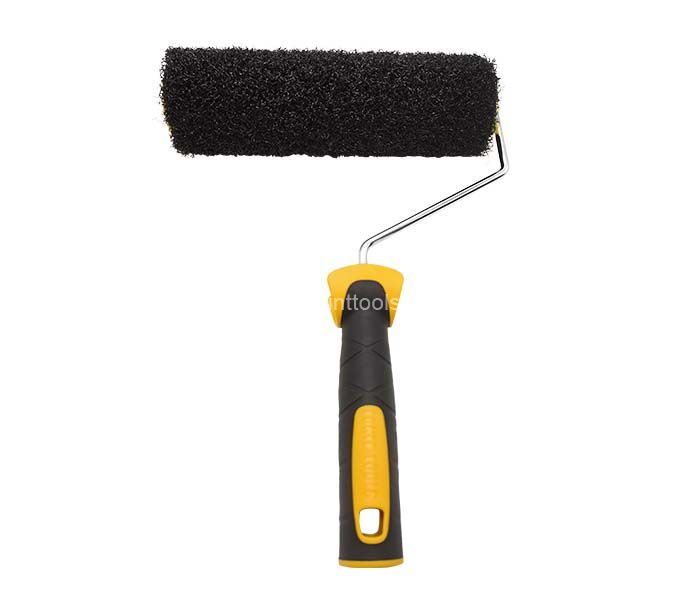
A heavy-duty roller frame is built for frequent commercial use, larger work areas, thicker coatings, and demanding jobsite conditions. Its components are generally designed to resist bending, loosening, corrosion, and premature wear.
- Stronger frame wire or reinforced frame construction.
- More durable cage, end caps, and rotating components.
- Better resistance to pressure when applying primers, elastomeric coatings, and heavy-bodied paints.
- Improved compatibility with extension poles and professional-grade handles.
- Longer expected service life under repeated daily use.
The main benefit is not simply a heavier feel. A suitable heavy-duty frame should remain stable while the user applies pressure, maintains a straight stroke, and works across rough or semi-rough surfaces.
Standard frames are intended for lighter and less frequent work
A standard roller frame is usually adequate for occasional maintenance, small rooms, light residential work, and projects using conventional interior or exterior paint. It is often lighter and less expensive at the time of purchase.
- Lower initial purchase cost.
- Lightweight handling for short jobs.
- Suitable for common 9 inch roller covers and general-purpose coatings.
- Easier to store and replace for occasional users.
- Acceptable performance when application pressure and working hours are limited.
However, a standard frame may show more deflection, bearing wear, handle looseness, or cage distortion when it is used continuously on large commercial projects. A low unit price can therefore become less attractive if the purchasing team must replace frames frequently.
Compare the Core Parameters Before Purchasing
Use specifications to match the frame with the jobsite
Product specifications should be evaluated as a complete system rather than by frame weight alone. The roller cover, coating type, extension pole, operator strength, and daily working hours all affect the required frame performance.
| Parameter | Heavy-duty roller frame | Standard roller frame | Commercial buying implication |
|---|---|---|---|
| Typical use frequency | Daily or repeated professional use | Occasional or moderate use | Heavy-duty models are generally better for crews with continuous workloads. |
| Frame strength | Reinforced construction with higher resistance to bending | Basic construction for normal application pressure | Strength matters when working on rough surfaces or with dense coatings. |
| Roller cover compatibility | Usually supports common commercial cover sizes and thicker nap options | Usually supports standard covers and common nap lengths | Confirm cover diameter, core size, and cage fit before ordering. |
| Rotation stability | Designed for smoother rotation under higher load | Suitable for normal pressure and lighter loads | Stable rotation helps reduce lap marks and uneven coating distribution. |
| Handle connection | Usually more suitable for extension poles and repeated tightening | Suitable for normal hand use and occasional pole use | A secure connection reduces interruptions on high walls and ceilings. |
| Grip durability | More resistant to wear, solvent exposure, and intensive handling | Acceptable for lower-use conditions | Grip material affects comfort and replacement frequency. |
| Operator fatigue | May provide better control but can be slightly heavier | Usually lighter for short jobs | Balance is more important than minimum weight during long shifts. |
| Cleaning requirements | Requires thorough cleaning to protect moving parts and connections | Generally simple to clean and replace | Maintenance procedures should be included in crew training. |
| Expected service life | Usually longer when maintained correctly | Usually shorter under heavy daily use | Compare total cost per project rather than purchase price alone. |
| Battery life | Not applicable to a conventional manual frame; applicable only to powered accessories | Not applicable to a conventional manual frame | Do not pay for battery features unless the workflow actually uses powered operation. |
Check the technical details that are often overlooked
Purchasing teams should request specific product information before approving a large order. General terms such as professional grade or industrial quality are not enough to evaluate a roller frame objectively.
- Frame wire diameter or reinforced frame construction.
- Overall frame length and recommended roller cover width.
- Roller cover core diameter and cage compatibility.
- Handle thread type and extension pole compatibility.
- Grip material, grip length, and anti-slip design.
- Corrosion resistance of metal components.
- Type of bearing, axle, or rotating support.
- Maximum recommended coating weight and operating conditions.
- Availability of replacement parts or replacement frames.
- Packaging consistency for bulk orders.
For battery-powered roller systems, buyers should separately evaluate battery voltage, run time per charge, charging time, spare battery availability, and battery replacement cost. These specifications do not apply to a conventional manual roller frame, so they should not be used to compare a manual heavy-duty frame with a standard manual frame.
Evaluate Actual Use Experience on Commercial Jobs
Stability affects finish quality and working speed
During commercial application, the frame must keep the roller cover aligned with the wall or ceiling. Excess movement can cause uneven pressure, edge lines, spatter, and inconsistent film thickness.
A heavy-duty frame usually provides better stability when the user presses against rough concrete, textured drywall, masonry, or previously coated surfaces. The advantage becomes more noticeable when using a thick nap cover or high-viscosity coating.
A standard frame can still provide a clean finish when the roller cover is correctly fitted and the surface is smooth. Its limitations become more apparent when the frame is overloaded, used with excessive pressure, or operated for many hours without a break.
Roller movement affects application efficiency
Consistent rotation allows the roller cover to pick up and release coating evenly. A frame that binds or develops excessive play forces the operator to adjust pressure and direction repeatedly.
- A stable heavy-duty frame can reduce interruptions caused by misalignment.
- A worn standard frame may allow the cover to wobble or drag.
- A clean rotating assembly helps maintain a consistent stroke.
- A properly matched roller cover is necessary for either frame type.
In practical use, productivity is influenced by the complete setup. A strong frame cannot compensate for an overloaded tray, an unsuitable nap length, an incorrect cover core, or paint that has not been properly mixed.
Comfort and fatigue matter during long shifts
Commercial painting often involves repetitive shoulder, wrist, and overhead movement. The best frame is not necessarily the lightest model. It should have a useful balance between strength, weight, grip comfort, and control.
- A contoured grip can reduce hand movement during repeated strokes.
- A secure pole connection can reduce wrist correction on ceilings.
- A balanced frame can help maintain even pressure across the roller width.
- A frame that is too heavy may increase fatigue during overhead work.
- A frame that is too flexible may force the user to apply extra pressure.
Crews should test the frame with the actual roller cover and coating planned for the project. A frame that feels comfortable without a cover may feel very different after adding a saturated cover.
Battery life is relevant only for powered roller equipment
Many buyers search for battery life because some commercial roller systems use powered pumps or motorized feed systems. A traditional heavy-duty roller frame and a traditional standard frame do not contain a battery, so both have no battery runtime or charging cycle.
If a powered accessory is part of the purchasing plan, evaluate the following separately:
- Operating time per charge under normal coating load.
- Charging time between shifts.
- Availability of spare batteries for continuous work.
- Performance decline as battery capacity decreases.
- Replacement battery cost and expected service life.
- Whether the motorized system adds cleaning and maintenance work.
This distinction prevents buyers from comparing unrelated product features and paying for powered functions that do not improve a manual roller workflow.
Compare the Advantages and Disadvantages of Each Frame Type
Heavy-duty roller frame advantages
- Better resistance to bending and deformation.
- More reliable control with thick coatings and heavy roller covers.
- Improved stability during long application sessions.
- Better suitability for extension pole work and high surfaces.
- Lower replacement frequency when properly maintained.
- More suitable for demanding commercial and industrial environments.
- Greater potential for consistent finish quality across large areas.
Heavy-duty roller frame disadvantages
- Higher initial purchase price.
- May weigh more than a basic frame.
- Can be unnecessary for short or occasional projects.
- Requires proper cleaning to protect rotating parts.
- May not improve results if the roller cover or coating is poorly matched.
Standard roller frame advantages
- Lower upfront cost.
- Lightweight and easy to handle for short applications.
- Suitable for routine interior maintenance and small projects.
- Simple to replace when damaged or lost.
- Usually sufficient for smooth surfaces and standard coatings.
Standard roller frame disadvantages
- Greater risk of bending under high pressure.
- May wear faster in daily commercial service.
- Less stable with thick nap covers or dense coatings.
- Can develop wobble or looseness after repeated use.
- Potentially higher long-term replacement cost for large crews.
Calculate Total Cost Instead of Comparing Unit Price Alone
Include labor, replacement, and downtime costs
The purchase price is only one part of the cost. A frame that saves a small amount at checkout may become more expensive if it causes slower production, frequent replacement, or quality corrections.
- Initial frame purchase price.
- Expected service life under the planned workload.
- Replacement frequency during a project cycle.
- Labor time lost to frame changes or equipment failure.
- Cost of correcting uneven application or finish defects.
- Cleaning and maintenance time.
- Shipping and inventory costs for replacement units.
- Training and standardization costs across the crew.
For example, a standard frame may be economical for a maintenance department that uses a roller a few times per month. The same frame may be an inefficient choice for a contractor completing several large projects each week.
Use a simple commercial purchasing formula
Buyers can compare options with a practical cost-per-use estimate:
Total cost per use = purchase price plus maintenance and replacement cost plus downtime cost, divided by the expected number of productive uses.
This formula does not need perfect accounting data. Even a reasonable estimate can reveal when a stronger frame offers better value than a cheaper frame. Procurement teams should also compare failure rates from actual crew feedback rather than relying only on product descriptions.
Select the Right Frame for Different Commercial Users
Heavy-duty frames are best for high-frequency professional crews
A heavy-duty roller frame is generally the stronger choice for users who work with demanding coatings, large surfaces, extended shifts, or frequent pole applications.
- Commercial painting contractors.
- New construction finishing crews.
- Industrial maintenance teams.
- Warehouse and factory maintenance departments.
- Hotel, hospital, school, and property management teams.
- Rental companies that need tools to withstand varied users.
- Crews applying primers, masonry coatings, or high-build products.
Standard frames are suitable for lighter workloads
A standard roller frame may be the better value for users with limited operating hours and predictable, low-stress applications.
- Small offices handling occasional touch-ups.
- Residential maintenance teams with limited wall areas.
- DIY users completing one-time projects.
- Facilities that use smooth surfaces and standard interior paint.
- Projects where frames are treated as short-term consumable tools.
Use a mixed purchasing strategy when workloads vary
Some organizations do not need one frame type for every task. A mixed inventory can reduce unnecessary spending while preserving performance where it matters most.
- Assign heavy-duty frames to lead painters, high-use crews, and demanding coatings.
- Use standard frames for touch-ups, minor maintenance, and low-pressure applications.
- Keep replacement covers and frames matched by size and core specification.
- Record failure, replacement, and user comfort data after each project.
- Review the purchasing mix at the end of the project season.
This approach is useful when a company has both intensive production work and occasional maintenance tasks.
Inspect Compatibility, Maintenance, and Quality Before Approval
Confirm compatibility with roller covers and extension poles
Even a strong frame can perform poorly if it does not match the roller cover. Before ordering, test the complete combination of frame, cover, pole, coating, and surface.
- Confirm that the cover fits tightly without excessive side movement.
- Check that the cage supports the full cover width.
- Verify that the handle thread fits existing extension poles.
- Test the frame with the longest nap used by the crew.
- Check whether the frame remains balanced when the cover is fully loaded.
- Confirm that the handle does not loosen during repeated strokes.
Follow a simple cleaning and inspection routine
Maintenance protects the investment and makes performance more consistent. Paint residue can restrict rotation, damage connections, and create rough movement.
- Remove the roller cover immediately after use.
- Clean wet paint from the frame, cage, axle, and handle connection.
- Use the cleaning method recommended for the coating type.
- Rotate the cage after cleaning to confirm smooth movement.
- Inspect for bent wire, cracks, loose parts, or corrosion.
- Dry the frame before storage.
- Store frames where they will not be crushed or exposed to unnecessary moisture.
Purchasing teams should ask whether the manufacturer provides replacement components, packaging protection, inspection guidance, and consistent quality across bulk shipments. These details become important when dozens or hundreds of frames are used across multiple crews.
Test samples before placing a large order
A sample test is one of the most reliable ways to reduce purchasing risk. Give the same frame to several experienced users and record their feedback.
- Ease of loading and unloading the roller cover.
- Stability during wall and ceiling application.
- Handle comfort after extended use.
- Rotation smoothness with different coatings.
- Performance with an extension pole.
- Cleaning time after the coating dries partially.
- Signs of bending, looseness, or early wear.
- Overall productivity compared with the current frame.
Make the Final Purchasing Decision
Choose heavy-duty when reliability has a direct business value
Select a heavy-duty roller frame when the cost of downtime, rework, operator fatigue, or frequent replacement is greater than the additional purchase price. It is usually the safer option for large commercial jobs, repeated daily use, demanding coatings, rough surfaces, and professional crews working under schedule pressure.
Choose standard when the workload is limited and predictable
Select a standard roller frame when the work is occasional, the coating is conventional, the surfaces are relatively smooth, and the frame will not be exposed to continuous high-pressure use. It can provide adequate performance without adding unnecessary equipment cost.
Use this final checklist before ordering
- Define the expected uses per week and per project.
- Identify the coating types and roller nap lengths involved.
- Confirm frame, cover, and extension pole compatibility.
- Compare stability and comfort during a real sample test.
- Estimate replacement and downtime costs.
- Review cleaning, storage, and inspection procedures.
- Request consistent specifications for every bulk shipment.
- Choose a supplier with dependable quality control and responsive support.
For most high-volume commercial jobs, a well-designed heavy-duty frame offers better control, stability, and long-term value than a basic standard frame. Standard frames remain practical for lighter workloads, but they should not be judged only by their lower unit price. By comparing structural strength, actual use experience, maintenance, total cost, and user requirements, purchasing teams can select a roller system that supports both finish quality and project efficiency.
Professional paint roller handle manufacturers such as G.SB can help commercial buyers match frame construction, handle design, roller compatibility, and production requirements to the intended job. Whether the final decision is a heavy-duty model, a standard model, or a combination of both, the best purchase is the one that delivers reliable performance for the specific crew, coating, surface, and workload.