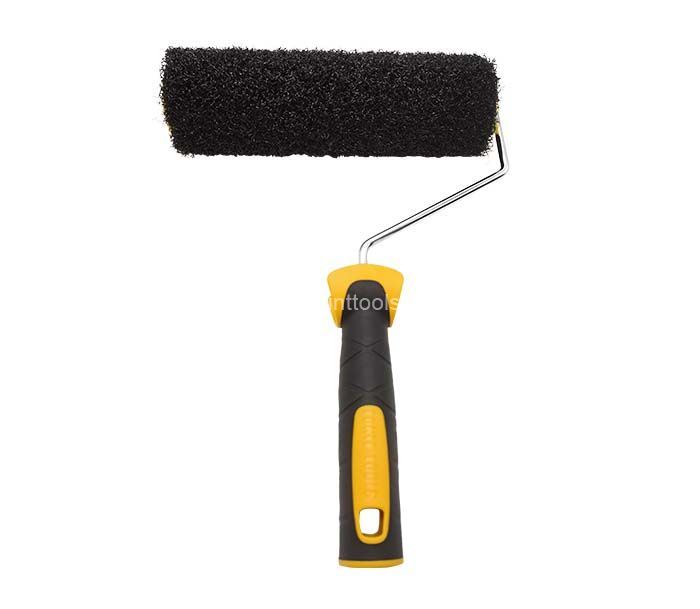
Choosing a roller cover is not a minor purchasing decision when a room has orange-peel, knockdown, plaster, or nearly flat drywall. A reliable paint roller frame manufacturer such as G.SB must match the frame, core, and cover design to the surface rather than treating every wall as smooth. This guide explains the best roller nap thickness for textured walls, the correct paint roller size for smooth walls, and how to choose roller nap for orange peel texture. It also connects nap selection with the LSI terms roller cover, wall texture, and paint application, using professional measurements such as wet film thickness (WFT), substrate profile, and edge retention. The aim is practical: fewer missed pores, less stippling, reduced splatter, and a coating film that reaches the manufacturer’s specified coverage rate.

Why Paint Roller Handle Manufacturers Link Nap Height to Wall Texture
Nap height describes the exposed fiber length on a roller cover. It determines how much coating the roller can carry and how far the fibers can enter the surface profile. A 1/4-inch nap is designed to skim a flat substrate, while a 3/4-inch or 1-inch nap can push paint into deeper valleys. The roller frame and handle influence control, but the cover’s fiber depth is the primary variable controlling paint transfer.
Wall texture can be understood as a measurable substrate profile. A smooth, properly sanded drywall surface has shallow irregularities, while orange peel contains repeated fine peaks and depressions. Knockdown texture has broader low areas and flattened ridges, and popcorn or heavily stippled finishes may have voids deeper than 1/2 inch. If the nap is too short, the roller touches only the high points. If it is too long, the cover may overload, create excessive stipple, and increase paint consumption.
For most interior acrylic or latex paints, manufacturers specify coverage in square feet per gallon under controlled conditions. Actual coverage can fall by 10–30% on porous or textured walls because more coating remains inside the surface profile. A roller that carries too much paint can also raise the wet film thickness above the recommended range, increasing drying time, lap marks, and the risk of sagging.
Paint Roller Handle Manufacturers’ Nap Thickness Chart by Surface
| Wall condition | Recommended nap | Preferred cover construction | Typical result | Main risk if incorrectly selected |
|---|---|---|---|---|
| Cabinet-grade panels, metal, doors, and very smooth drywall | 1/8–1/4 inch | High-density microfiber or fine woven fabric | Low stipple and controlled film build | Insufficient paint in shallow pores with 1/8 inch on ordinary drywall |
| Standard painted drywall with light texture | 3/8 inch | Microfiber or shed-resistant woven fabric | Balanced coverage and moderate texture hiding | Visible holidays with a shorter nap; excess stipple with a longer nap |
| Fine orange peel | 3/8–1/2 inch | Microfiber or premium woven cover | Paint reaches most recesses without excessive spray | Missed valleys when using 1/4 inch |
| Medium orange peel or light knockdown | 1/2 inch | Woven or microfiber cover with strong core bonding | Improved penetration and consistent color | Overloading and stipple when pressure is excessive |
| Medium knockdown, rough plaster, and masonry block | 3/4 inch | Durable woven fabric or high-density knit | Better valley coverage and fewer uncoated pockets | Splatter and slow release on smooth areas |
| Heavy texture, coarse stucco, and deep popcorn surfaces | 1 inch or longer | Long-fiber woven cover with reinforced core | Maximum reach into deep surface irregularities | Heavy stipple, high paint use, and difficult edge control |
These values are starting points rather than fixed laws. A wall coated with thick elastomeric paint may need a longer nap than the texture alone suggests because the coating has higher viscosity. Conversely, a thin acrylic sealer may perform better with a shorter nap to avoid excessive accumulation. Always test a small section before purchasing enough material for an entire project.
How Paint Roller Frame Manufacturers Match Fiber Type to Paint Application
Microfiber covers for smooth and lightly textured walls
Microfiber rollers typically hold a substantial volume of paint while releasing it gradually. Their split-fiber structure can reduce drag and produce a more uniform finish on smooth drywall, doors, and fine orange peel. A 3/8-inch microfiber cover is often a practical starting point for residential walls because it can enter shallow texture without producing the heavy pattern associated with a 1/2-inch or 3/4-inch cover.
Microfiber is useful when color uniformity matters. Dark colors, low-sheen paints, and rooms receiving strong side lighting can reveal lap marks and uneven pressure. Use a cover with a solvent-resistant core and tightly bonded end caps; loose fibers or a distorted core can leave lines at the edge of each stroke.
Woven covers for dependable release and repeated production work
Woven covers are often selected by professional painters because their fabric retains shape during repeated loading and cleaning. They are suitable for acrylic, vinyl-acrylic, and many water-based primers. On medium texture, a 1/2-inch or 3/4-inch woven cover can maintain contact with ridges while transferring enough material to fill depressions.
For contractors, the useful specification is not only nap length but also shed resistance, core diameter, fabric density, and solvent compatibility. A cover that sheds several visible fibers over a 100-square-foot test area is unsuitable for a finish coat, even if its nap height is correct.
Foam rollers and when paint roller handle manufacturers do not recommend them
Foam rollers work best on smooth, nonporous surfaces such as doors, trim, laminate, and some metal panels. They are not a general solution for textured walls. Texture can tear the foam, compress its surface, and create uneven paint release. On standard drywall, a fine foam cover may also produce a different sheen from the surrounding rolled area because it leaves a flatter surface profile.
Step-by-Step Roller Nap Selection Process for Wall Textures
-
Identify the existing substrate. Shine a work light across the wall at a low angle. Look for pores, ridges, repaired areas, and exposed joint compound. Run a gloved hand across the surface without pressing hard. If the texture catches the glove or contains depressions visibly deeper than 1/8 inch, treat it as textured rather than smooth.
-
Measure or estimate the surface profile. A simple depth gauge, profile comb, or comparison against known nap lengths can improve accuracy. A profile below approximately 1/16 inch normally suits a 1/4-inch cover. A profile near 1/8 inch generally benefits from 3/8 inch. Larger or irregular depressions usually require 1/2 inch or more.
-
Check the coating viscosity. Stir the paint thoroughly and read the technical data sheet for recommended application tools and coverage. High-build primers, elastomeric coatings, and textured paints have greater viscosity and may require a longer nap. Do not thin paint unless the product instructions permit it; unauthorized thinning changes opacity, adhesion, and dry-film performance.
-
Prepare the roller cover. Remove loose lint from a new cover with masking tape or a lint brush. For water-based paint, dampen the cover lightly and spin or squeeze out excess water. The cover should be conditioned, not wet. A dry roller absorbs paint unevenly during the first few passes.
-
Load the roller to the correct volume. Roll the cover through the tray’s deep section and then across the ribbed ramp three to five times. The fibers should be saturated without dripping. On a 9-inch cover, apply a test pass over approximately 3–4 square feet. If the roller leaves dry skips immediately, increase loading or nap length. If it splatters and feels heavy, reduce loading and pressure.
-
Use a controlled application pattern. Paint a manageable section, often 3 by 3 feet or 3 by 4 feet, depending on temperature and open time. Apply in an overlapping “W” or vertical pattern, then finish with light, parallel strokes in one direction. Keep a wet edge; overlapping partially dried paint causes visible bands and gloss differences.
-
Inspect the first coat under side lighting. After the coating loses its wet shine, check for holidays, pinholes, heavy stipple, and roller lines. Do not judge color or sheen while the paint is wet. If the ridges are covered but depressions remain light, move up one nap size. If the wall is fully covered but the pattern is too pronounced, move down one nap size for the next coat or reduce pressure.
-
Clean or replace the cover according to the coating. Water-based paint should be rinsed with water before it dries inside the fibers. Oil-based products require the solvent specified on the product label. A hardened cover loses its ability to release paint evenly, even when the fabric appears intact.
Common Roller Nap Errors Identified by Paint Roller Handle Manufacturers
The most frequent error is using a 1/4-inch roller on every interior wall. It may look efficient on flat drywall, but it cannot reliably reach the depressions in orange peel or knockdown texture. The result is a patchy first coat, especially where the old color contrasts strongly with the new color.
The opposite error is using a 3/4-inch cover on smooth drywall because it holds more paint. Greater paint capacity does not automatically improve productivity. On a flat substrate, the longer fibers flex and release coating unevenly. This can increase visible stipple, paint consumption, and the time required for back-rolling. If a gallon rated for 350 square feet covers only 260 square feet, the application may be exceeding the specified film build or losing material through roller loading and splatter.
Another problem is applying force instead of selecting the correct nap. Pressing hard on a short cover may push paint across high points, but it does not create enough fiber depth to fill a cavity. Excess pressure also squeezes paint from the roller, producing thin areas at the leading edge and a heavier band at the trailing edge.
Painting over repairs without priming creates a separate appearance problem. Joint compound and bare drywall paper absorb water at different rates from previously painted areas. Even the correct roller cover cannot fully correct flashing caused by unequal porosity. Seal repaired sections with the recommended primer, allow the primer to dry, and then apply the finish coat using the selected nap.
Advanced Roller Cover Techniques for Consistent Wet Film Thickness
Control WFT instead of judging paint by visual brightness
Wet film thickness is the thickness of the liquid coating immediately after application. A wet-film comb can measure it in mils, where 1 mil equals 0.001 inch. If the paint technical data sheet specifies a wet range of 4–6 mils, test the first section rather than relying on color intensity. A longer nap may carry more material, but the painter still controls WFT through loading, pressure, speed, and overlap.
For example, if a 3/8-inch microfiber cover produces approximately 5 mils on smooth drywall but only 3 mils over medium knockdown because the valleys remain unfilled, a 1/2-inch cover may bring the application closer to the target. If the new cover produces 8 mils and visible stipple, reduce the amount loaded per pass rather than automatically returning to the shorter nap.
Use a suitable frame and handle length
A rigid 9-inch frame is suitable for most interior walls, while a 4-inch frame helps with narrow areas, corners, and cabinet sides. Extension poles improve reach on ceilings and tall walls, but a flexible or poorly balanced pole encourages excessive pressure. The frame should rotate freely without side-to-side wobble. A comfortable handle reduces fatigue, which helps maintain consistent stroke speed and pressure over several hundred square feet.
Back-roll porous texture before the paint closes
Porous plaster, masonry, and unsealed joint compound can absorb the liquid portion of the paint quickly. Work in small sections and back-roll while the coating remains open. Back-rolling redistributes the coating and improves contact with the substrate profile. Do not repeatedly roll an area after the surface begins to tack; this creates texture peaks and can pull partially dried paint from the wall.
Use two nap sizes when a wall changes texture
Many homes contain smooth repairs beside textured original walls. A single roller may not produce the same appearance across both areas. Use a 3/8-inch cover for the smooth section and a 1/2-inch cover for medium orange peel, or feather the transition while the paint is wet. Keep the direction of final strokes consistent so differences in roller stipple are less noticeable under directional light.
Practical Case: Choosing a Roller for Orange Peel and Knockdown Texture
Consider a 500-square-foot living room with fine orange peel, a water-based eggshell paint, and several drywall repairs. The wall profile is approximately 1/16–1/8 inch, so a 3/8-inch microfiber cover is the logical first test. After priming the repairs, the painter loads the roller evenly and applies a 3-by-4-foot section. The first coat covers the old color but leaves a few pale depressions. A second coat with the same cover, applied at a measured WFT within the paint manufacturer’s range, should normally solve the issue.
Now consider a 700-square-foot basement with medium knockdown texture and a high-build acrylic coating. A 1/2-inch woven cover is more appropriate because the surface contains wider valleys and the coating has higher viscosity. The painter tests a 10-square-foot area, checks for splatter, and measures the wet film. If the finish remains below the target WFT, a 3/4-inch cover may be justified. If it exceeds the target, the painter should reduce loading or work in smaller sections rather than adding more nap automatically.
These cases show why the correct answer is not simply “longer nap for rough walls.” The final selection depends on texture depth, coating chemistry, sheen, desired stipple, temperature, humidity, and the operator’s loading technique.
Maintenance and Purchasing Guidance from Paint Roller Handle Manufacturers
When comparing G.SB roller products, examine the complete system: frame diameter, bearing smoothness, handle ergonomics, core strength, fabric bonding, nap tolerance, and compatibility with water-based or solvent-based coatings. A nominal 1/2-inch nap can vary in effective paint capacity if the fabric density and backing construction differ.
For repeated commercial work, record the cover type, paint product, wall profile, coverage achieved, and observed WFT. This creates a small application database that makes future projects more predictable. Replace a cover when its fibers become matted, its ends flare, the core deforms, or cleaning no longer restores even release. A low-cost cover that requires extra passes can consume more labor and paint than a properly engineered cover.
Store clean covers vertically or suspended so the nap is not permanently compressed. Avoid leaving them submerged in water or solvent for long periods, since the core adhesive may weaken. Before reuse, check that the roller rotates without resistance and that no dried coating remains at the end caps.
Final Recommendation for Selecting Roller Nap Thickness
Use 1/4 inch for smooth drywall and fine finishes, 3/8 inch for standard walls and fine orange peel, 1/2 inch for medium orange peel or light knockdown, and 3/4–1 inch for deep texture, coarse plaster, and masonry. Confirm the choice with a test section, observe the roller cover pattern under side lighting, and verify wet film thickness when the coating specification requires it. Whether the project involves the best roller nap thickness for textured walls, the correct paint roller size for smooth walls, or deciding how to choose roller nap for orange peel texture, G.SB can help match the roller frame, handle, and cover to the actual wall texture and paint application conditions. Contact G.SB for product recommendations, technical specifications, and pictures of compatible roller systems.