Export Compliance and Labeling for Paint Tool Wholesale Shipments
For G.SB, successful Export Compliance and Labeling for Paint Tool Wholesale Shipments depends on a controlled process: classify the Imitation Wood Grain Effect Tool Wholesale products correctly, verify destination-country requirements, prepare accurate commercial documents, apply durable carton and product labels, and complete a final pre-shipment inspection. Whether you are a first-time importer or an experienced distributor, we recommend using a compliance checklist, confirming the HS code with a customs broker, separating tools from chemical coatings, and retaining inspection records for every lot. This approach helps a wood graining tool supplier reduce customs delays, prevent relabeling costs, and deliver consistent wholesale shipments under the G.SB brand.
Why Export Compliance Matters for G.SB Paint Tools
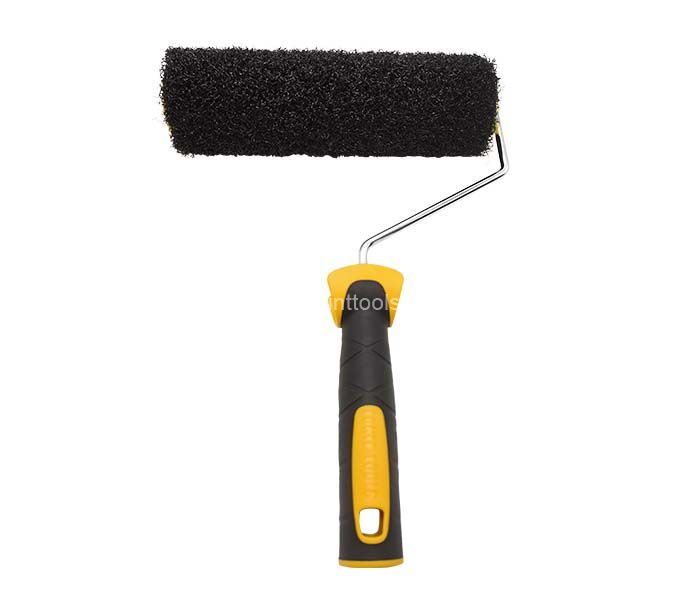
Imitation wood graining tools—including wood grain rollers, graining combs, rocker tools, texture brushes, and decorative painting accessories—may appear simple, but international shipments involve several compliance layers.
A customs authority, freight forwarder, or distributor may review:
- Product classification and HS code
- Country of origin marking
- Commercial invoice accuracy
- Packaging and carton labels
- Material declarations
- Safety data documentation for chemical products
- Importer and consignee information
- Language requirements
- Wood packaging compliance
- Product claims and technical specifications
As a professional wood graining tool supplier, we treat export documentation as part of product quality rather than as an administrative afterthought. A physically compliant product can still be delayed if the invoice describes it as “painting accessories” while the packing list identifies it as “plastic wood grain rollers.”
The product description, classification, packaging, and shipping documents must tell the same story.
Stage One: Define the G.SB Product Scope
Before selecting a tariff code or creating a label, we separate the shipment into product categories. This prevents tools, accessories, and chemicals from being handled under one unclear description.
Typical G.SB product categories
| Product category | Examples | Main compliance concern |
|---|---|---|
| Hand-operated graining tools | Wood grain rollers, combs, rocker tools | Correct HS classification, material identification |
| Brush products | Texture brushes, stippling brushes | Fiber, handle, and country-of-origin description |
| Tool sets | Roller and comb kits | Set classification and component list |
| Packaging accessories | Plastic cases, cardboard inserts | Material declarations and recycling marks |
| Coatings or additives | Glazes, stains, retarders | SDS, dangerous goods, chemical regulations |
For an Imitation Wood Grain Effect Tool Wholesale order, I recommend creating a SKU-level product master file containing:
- G.SB SKU and product name
- Product photographs
- Primary material
- Handle material
- Net and gross weight
- Dimensions, preferably recorded to 0.01 mm where dimensional tolerance is commercially important
- Packaging configuration
- Country of origin
- Recommended HS code
- Applicable test reports or declarations
- Destination-market notes
This file gives the customs broker, warehouse, buyer, and freight forwarder one consistent source of information.
Stage Two: Confirm HS Classification and Origin
HS classification determines how customs authorities assess duty, import controls, and statistical reporting. The correct code depends on the tool’s function, material, construction, and whether it is imported as an individual product or a retail set.
We should not rely only on a supplier’s historical code. Tariff schedules differ by country, and national tariff subdivisions may change.
Practical classification workflow
- Describe the product by function, not by marketing language.
- “Hand-operated decorative painting roller for creating wood-grain patterns” is more useful than “premium artistic tool.”
- Identify the dominant material and construction.
- Plastic, rubber, metal, wood, or mixed-material construction may affect classification.
- Check whether the product is sold individually or as a set.
- Compare the proposed HS code with the destination country’s tariff database.
- Ask the importer or licensed customs broker to confirm the local tariff line.
- Keep a written classification rationale in the shipment file.
Country of origin is not automatically the same as the shipping country. The origin generally depends on where the product underwent its qualifying manufacturing process. If G.SB tools are molded, assembled, or packaged across multiple countries, the importer should confirm the applicable origin rule before printing permanent markings.
A compliant origin marking normally includes wording such as:
- “Made in [Country]”
- “Country of Origin: [Country]”
The exact format, location, and language requirements must be confirmed for the destination market.
Stage Three: Build a Destination-Market Compliance Matrix
Export compliance is destination-specific. We use a matrix to compare the requirements of the United States, European Union, United Kingdom, Canada, Australia, and other target markets before the first commercial shipment.
Recommended compliance matrix
| Requirement | United States | European Union | United Kingdom | Action |
|---|---|---|---|---|
| Product description | Required on customs documents | Required on customs documents | Required on customs documents | Use one standardized description |
| Country of origin | Generally required | Required in applicable cases | Required in applicable cases | Verify marking rules |
| Chemical information | SDS and hazardous-goods rules if coatings are included | REACH/CLP may apply | UK REACH/GB CLP may apply | Separate tools from chemicals |
| Packaging waste | State-specific or federal requirements may apply | Packaging obligations may apply | Packaging obligations may apply | Confirm importer responsibility |
| Wood packaging | ISPM 15 requirements for regulated wood packaging | ISPM 15 requirements | ISPM 15 requirements | Use compliant pallets and crates |
| Product safety | Depends on intended use and claims | General product safety obligations may apply | Product safety obligations may apply | Review product category and claims |
The matrix should identify:
- Responsible party
- Required document
- Submission deadline
- Label language
- Testing requirement
- Record-retention period
- Status: pending, verified, or approved
A reliable wood graining tool supplier will not assume that one label design works globally. Instead, we prepare a base G.SB label and add market-specific panels where necessary.
Stage Four: Prepare Product and Carton Labels
Labels must be readable, durable, and consistent with the commercial documents. They should survive handling, humidity, abrasion, and transport vibration.
Product-level label information
Where applicable, the G.SB product or retail package should include:
- Brand: G.SB
- Product name and function
- SKU or model number
- Quantity
- Material information
- Country of origin
- Manufacturer or responsible economic operator information, where required
- Importer information, where required
- Batch or lot number
- Use instructions
- Cleaning and storage guidance
- Applicable warnings
- Recycling or packaging marks required by the destination
For compact tools, the information may appear on the retail card, pouch, sleeve, or inner box rather than directly on the tool. However, the outer packaging must remain linked to the product through a model number or batch code.
Master-carton markings
Each carton should be scannable and easy to identify in a warehouse. A practical G.SB carton label can include:
- G.SB logo and product family
- SKU and product description
- Purchase order number
- Carton number, such as “Carton 1 of 12”
- Quantity per carton
- Net weight and gross weight
- Carton dimensions
- Country of origin
- Handling symbols
- Batch number
- Barcode or QR code for internal traceability
We recommend a minimum label verification standard of 100% visual inspection for carton markings before loading. For barcode-based operations, the warehouse should scan a sample from every SKU and confirm readability at the intended scanning distance.
Stage Five: Manage Materials, Coatings, and Chemical Documentation
The tool itself is usually easier to export than a shipment containing paint, glaze, stain, solvent, or cleaning chemicals. The moment a chemical product is included, additional transport and market regulations may apply.
Separate the following shipment types
- Tools only
- Tools with non-hazardous water-based coatings
- Tools with hazardous coatings
- Tools bundled with cleaning chemicals
- Tools packaged with aerosol or solvent-based products
For chemical items, obtain and review the current Safety Data Sheet, or SDS. The SDS should identify:
- Product composition
- Hazard classification
- Transport classification
- UN number, if applicable
- Packing group, if applicable
- Flash point
- Storage conditions
- Personal protective equipment
- Spill and disposal instructions
- Emergency contact information
Do not place a hazardous chemical in the same shipment description as “plastic painting tools.” The invoice and transport documents should identify each regulated product accurately.
For paint adhesion and decorative-finish claims, supporting technical testing may include ASTM D3359 for adhesion, ASTM D4060 for abrasion resistance, or ASTM D2244 for color difference, where those tests are relevant to the coating system. These standards do not automatically certify the tool itself; they support specific performance claims only when the test method, substrate, coating, and conditions are documented.
Stage Six: Align Packaging with International Transport Rules
Packaging protects both the goods and the compliance status of the shipment.
For G.SB paint tools, we typically assess:
- Tool-to-tool contact that may cause scratches
- Handle deformation
- Roller surface compression
- Moisture exposure
- Carton stacking strength
- Pallet stability
- Inner-pack quantity
- Drop and vibration risk
- Barcode visibility after stretch wrapping
If wood pallets, crates, or dunnage are used, confirm compliance with ISPM 15 requirements. Regulated wood packaging generally needs approved treatment and an official mark. Avoid using untreated wood simply because the shipment is low value; customs may hold the entire consignment for inspection.
A packaging specification should state:
- Carton board grade
- Internal protection method
- Maximum stacking height
- Pallet dimensions
- Maximum gross weight
- Moisture barrier requirements
- Label position
- Inspection frequency
For high-volume wholesale shipments, we can use a packaging drop test and compression test before mass production. The acceptance criteria should be written in advance instead of decided after damage occurs.
Stage Seven: Create a Complete Export Document Set
A compliant shipment requires more than an invoice. The exact documents depend on the destination, Incoterm, carrier, and product scope.
Core export documents
- Commercial invoice
- Packing list
- Bill of lading or air waybill
- Certificate of origin, when required
- Export declaration, when required
- Product specification sheet
- Material declaration
- SDS for chemical products
- Test report or certificate, when applicable
- Insurance certificate, if required by the Incoterm or buyer
- Import permit or conformity document, if required
Commercial invoice checklist
The invoice should show:
- Seller and buyer legal names and addresses
- Consignee and notify party
- Invoice number and date
- Purchase order number
- Accurate product description
- G.SB SKU or model number
- Quantity and unit of measure
- Unit price and total value
- Currency
- Incoterm and named place
- Country of origin
- HS code, if agreed with the importer
- Gross and net weight
- Package count
- Signature or electronic authorization, where required
Avoid vague descriptions such as “samples,” “accessories,” or “tools” when the products are being sold commercially. Customs valuation and classification become more difficult when the description does not identify the function and material.
Stage Eight: Establish a Pre-Shipment Quality Gate
Before the container or parcel leaves the warehouse, G.SB should use a documented release process. This is where export compliance, quality control, and logistics meet.
Suggested pre-shipment inspection
- Confirm SKU and purchase order match
- Verify quantity by carton and total shipment
- Check product appearance and function
- Confirm labels against the approved artwork
- Verify country-of-origin marking
- Check carton dimensions and weights
- Scan barcodes
- Confirm invoice and packing list consistency
- Review SDS and dangerous-goods documents, if applicable
- Inspect pallet marks and ISPM 15 status
- Photograph palletized cargo
- Record seal number and loading time
For critical wholesale orders, I recommend 100% inspection of labels and a documented sampling plan for product function. Dimensional checks can be recorded to 0.01 mm for precision components, while visual defects should be classified by severity.
A basic acceptance plan may include:
| Checkpoint | Suggested control |
|---|---|
| Product identity | 100% SKU and label match |
| Quantity | 100% carton count verification |
| Barcode | Scan every SKU and carton label sample |
| Appearance | AQL plan agreed with buyer |
| Dimensions | Caliper measurement to 0.01 mm where specified |
| Packaging | Drop or compression test for new designs |
| Documents | Two-person review before release |
The “two-person review” is especially useful because one person may overlook a mismatch that another reviewer identifies immediately.
Common Export Problems and Practical Solutions
Incorrect HS code
Problem: The importer receives a duty assessment different from the quotation.
Solution: Confirm the tariff code with the destination-country broker before production. Keep the classification rationale and do not reuse a code merely because it appeared on an old invoice.
Missing origin marking
Problem: Cartons arrive without the required country-of-origin statement.
Solution: Add origin verification to the artwork approval and pre-shipment checklist. Photograph the final carton before loading.
Chemical and tool products mixed together
Problem: A shipment is delayed because the carrier was not informed about regulated coatings.
Solution: Separate tools and chemicals by SKU and document them individually. Obtain the SDS before booking transport.
Label language is incomplete
Problem: A distributor cannot legally sell the product because warnings or instructions are not in the required language.
Solution: Ask the importer for the destination-market language requirements and approve translated artwork before mass printing.
Carton data does not match the invoice
Problem: The packing list shows 48 cartons, while the warehouse loads 50.
Solution: Use barcode scanning and a final loading reconciliation. The shipment should not be released until physical and documentary quantities match.
Unsupported marketing claims
Problem: The package claims “professional-grade,” “non-toxic,” or “ASTM certified” without supporting evidence.
Solution: Maintain a claims file with test reports, technical specifications, and approval records. Remove claims that cannot be substantiated.
G.SB Case Example: Reducing Clearance Delays
A G.SB distributor shipping an Imitation Wood Grain Effect Tool Wholesale order faced repeated customs questions because the invoice used broad descriptions and the cartons lacked batch identification.
We addressed the issue in four stages:
- Replaced generic descriptions with SKU-level functional descriptions.
- Added country of origin, carton quantity, and batch codes.
- Separated tool sets from chemical finishing products.
- Introduced a 100% carton-label inspection and two-person document review.
The distributor’s next shipment contained 12 cartons and cleared without a documentation amendment. The receiving warehouse also reduced manual identification time because each carton showed the SKU, quantity, and carton sequence.
This result illustrates an important point: export compliance is not only about avoiding penalties. Accurate labeling also improves receiving efficiency, inventory control, and buyer confidence in the wood graining tool supplier.
Practical G.SB Compliance Tools
We recommend maintaining the following resources for every export program:
1. Product compliance master file
Include:
- SKU
- Product description
- Materials
- Dimensions
- Origin
- HS classification
- Packaging configuration
- Test records
- Label artwork
- Revision history
2. Destination-market matrix
Track:
- Country
- Importer
- Required language
- Label rules
- Chemical rules
- Packaging rules
- Responsible party
- Review date
3. Shipment document checklist
Use a signed checklist covering:
- Invoice
- Packing list
- Transport document
- Origin documentation
- SDS
- Test reports
- Export declaration
- Broker confirmation
4. Label approval record
Record:
- Artwork revision
- Approver
- Date
- Market
- Product SKU
- Translation reviewer
- Print quantity
5. Digital photo archive
Store photographs of:
- Product labels
- Master cartons
- Pallets
- Container loading
- Seal number
- Final document set
These records support traceability if a buyer, customs authority, or freight insurer raises a question later.
How to Choose a Compliant Wood Graining Tool Supplier
When comparing a wood graining tool supplier, do not evaluate only unit price. Ask whether the supplier can manage the complete export workflow.
A capable supplier should be able to provide:
- Consistent SKU identification
- Material and dimensional specifications
- Batch traceability
- Export-ready commercial documents
- Durable packaging
- Country-of-origin marking
- Label artwork control
- Inspection records
- SDS coordination for chemical products
- 24-hour response to documentation questions
- A defined corrective-action process
For G.SB, a 24-hour response target is useful when a freight forwarder requests a revised invoice or a buyer needs a label confirmation before vessel cut-off. Fast communication does not replace accuracy, but it can prevent a minor documentation issue from becoming a missed sailing.
Final Export Compliance Checklist for G.SB
Before releasing an Imitation Wood Grain Effect Tool Wholesale shipment, confirm the following:
- [ ] Product category and function are clearly defined.
- [ ] HS classification has been reviewed for the destination country.
- [ ] Country of origin is accurate and marked where required.
- [ ] Product and carton labels match the approved artwork.
- [ ] Required language and warnings are included.
- [ ] Chemical products are separated and supported by current SDS documents.
- [ ] Any ASTM, DIN, or ISO reference is supported by the correct test record.
- [ ] Commercial invoice and packing list match physical quantities.
- [ ] Pallets and wood packaging meet ISPM 15 requirements where applicable.
- [ ] Barcodes are readable.
- [ ] Labels have passed 100% visual inspection.
- [ ] Shipment photographs and approval records are archived.
- [ ] Broker and importer have confirmed outstanding requirements.
G.SB Helps Make Wholesale Paint Tool Shipments More Predictable
Export success comes from controlling small details before the cargo reaches the border. By combining accurate classification, destination-specific labeling, documented testing, chemical segregation, ISPM 15-compliant packaging, and a 100% final label inspection, G.SB can support reliable wholesale distribution across international markets.
The most important lesson is simple: choose a wood graining tool supplier that treats compliance as part of manufacturing, not as a last-minute shipping task. With a structured product master file, market compliance matrix, document checklist, and traceable inspection process, Export Compliance and Labeling for Paint Tool Wholesale Shipments becomes a repeatable operating system rather than a source of uncertainty.
 Previous: None