Dragging Pad vs Ragging Cloth: Which Creates Finer Texture Lines
For buyers comparing a dragging pad and a ragging cloth for decorative wall finishes, the main question is not simply which tool is cheaper. The real issue is which tool produces finer, cleaner, and more repeatable texture lines on a particular paint, primer, and wall surface. This guide also helps purchasing teams evaluating Stir Paint Mixer Walls Dragging Pad Wholesale options from suppliers such as G.SB.
The dragging pad usually creates finer and more consistent texture lines.
Why the pad produces a cleaner linear pattern
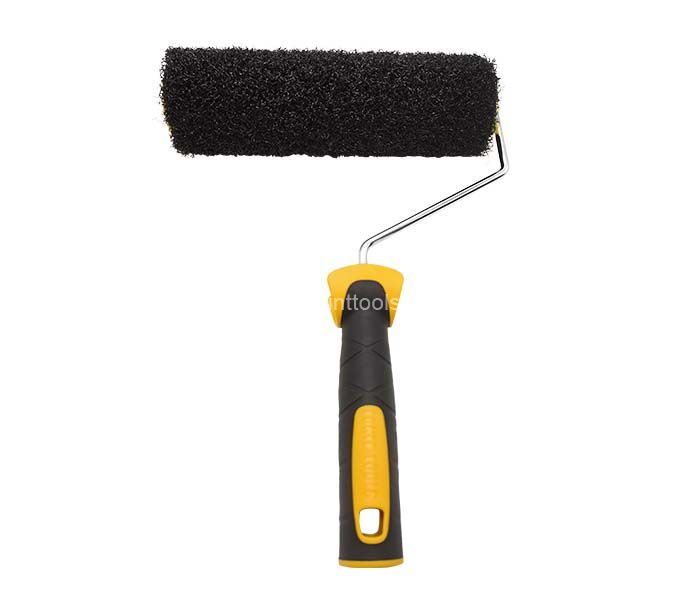
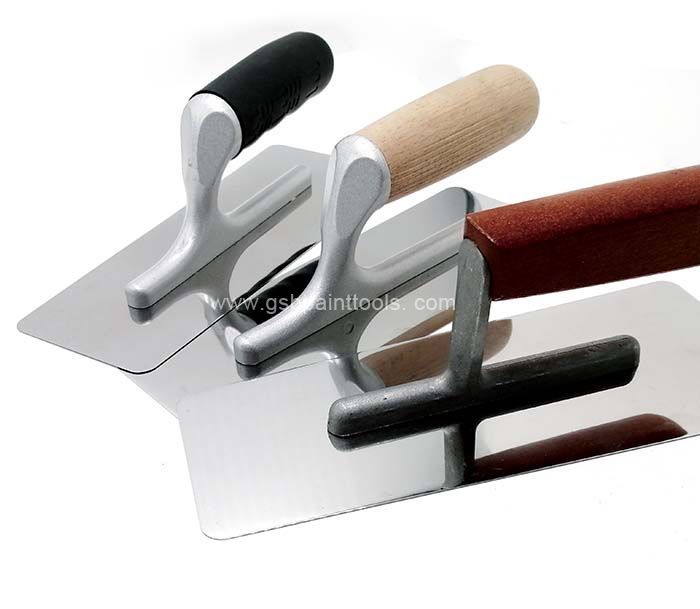
A dragging pad has a more controlled contact surface. Its fibers, foam structure, or textured face are normally arranged to pull paint in a relatively even direction. This creates narrower lines with less random bunching, especially when the operator maintains a consistent angle and pressure.
The pad is generally the stronger choice when the finish specification requires:
- Fine parallel texture lines.
- Consistent spacing between lines.
- Low variation from one wall section to another.
- A restrained decorative effect for commercial interiors.
- Repeatable results across multiple rooms.
Why the ragging cloth creates a softer and less predictable finish
A ragging cloth compresses, folds, twists, and releases differently during every stroke. This creates a more organic appearance, but it also makes the line width and spacing less uniform. The result can be attractive when the design calls for movement and variation, but it is less suitable when the purchaser needs a precise striped texture.
Ragging cloth is often selected for:
- Clouded or broken decorative finishes.
- Rustic walls and distressed interiors.
- Soft transitions between paint tones.
- Handcrafted surfaces where variation is part of the design.
- Small projects where maximum consistency is not essential.
The core tool parameters determine how fine the finished lines can be.
Comparison table for dragging pads and ragging cloths
| Parameter | Dragging Pad | Ragging Cloth | Effect on Texture Lines |
|---|---|---|---|
| Line definition | High and relatively consistent | Medium to low, depending on folds | The pad normally creates sharper and finer lines |
| Texture variation | Low to medium | Medium to high | The cloth creates a more natural and irregular appearance |
| Pressure control | Easy to standardize | More dependent on hand technique | Standardized pressure improves repeatability |
| Paint loading | Usually more uniform | Can vary between folds and sections | Uneven loading can create thick or broken lines |
| Edge control | Better for straight or directional work | Less predictable | The pad is easier to guide along masking lines |
| Learning curve | Short to medium | Medium | The cloth requires more practice to control consistently |
| Large-wall productivity | Usually higher | Moderate | The pad supports a more repeatable work rhythm |
| Cleaning and reuse | Depends on pad material | Usually easy if the cloth is washable | Both require prompt cleaning to prevent hardened paint |
| Battery life | Not applicable for a manual pad | Not applicable for a manual cloth | Neither tool requires a battery |
| Operational stability | High when the pad remains flat | Medium because folds change during use | A stable contact surface creates more consistent lines |
How material hardness and surface density affect the pattern
A pad that is too soft can absorb excessive paint and produce wide, blurred marks. A pad that is too rigid may leave harsh edges or remove too much coating from the wall. The most useful construction normally combines enough flexibility to follow the surface with enough resilience to preserve the intended line shape.
For purchasing evaluation, inspect the following material properties:
- Fiber or foam density.
- Compression recovery after repeated strokes.
- Resistance to solvent or water-based coatings.
- Surface uniformity across the working face.
- Handle strength and connection stability.
- Ease of cleaning without permanent deformation.
The wall coating and paint viscosity can change the apparent fineness.
Thin coatings reveal narrower lines
A thin decorative coating allows the contact surface to glide across the wall without depositing excessive material. With a dragging pad, this usually produces fine, visible lines with limited buildup. With a ragging cloth, a thin coating can create broken marks and expose more of the base color.
When the paint is too thin, the operator may experience:
- Weak color coverage.
- Interrupted lines.
- Visible dry patches.
- Excessive drag resistance on porous walls.
Thick coatings create heavier and wider marks
High-viscosity paint can make either tool appear less precise. The pad may begin to skip, while the cloth can accumulate paint in its folds and release heavy patches. Mixing the coating thoroughly and adjusting its viscosity according to the coating manufacturer's instructions is important before testing the texture tool.
This is where a reliable mixing process becomes relevant. A stable paint mixer can help distribute pigments, fillers, and additives more evenly before application. G.SB can be considered by buyers who are evaluating a combined supply program involving Stir Paint Mixer Walls Dragging Pad Wholesale products.
The wall profile influences line continuity
Fine lines are easiest to produce on a smooth, sealed, and properly primed surface. Rough plaster, unfilled pores, dust, or uneven primer absorption can interrupt the motion of the pad or cloth. A ragging cloth may hide some surface defects through its irregular pattern, while a dragging pad exposes them more clearly.
Before comparing tools, prepare the wall as follows:
- Remove dust, loose coating, grease, and sanding residue.
- Fill cracks, pinholes, and visible surface depressions.
- Sand the repair areas until they are level with the surrounding wall.
- Apply a compatible primer or base coat.
- Allow the surface to dry evenly before applying the decorative layer.
- Test both tools on the same prepared area.
The actual use experience favors the pad for stability and the cloth for flexibility.
Dragging pad handling experience
During use, the dragging pad normally feels more stable because the working face remains comparatively flat. The operator can establish a repeatable stroke length and maintain a similar pressure from one pass to the next. This reduces fatigue when covering large wall areas.
In practical use, a good dragging pad should provide:
- A secure grip that does not rotate unexpectedly.
- A flat contact surface with no raised defects.
- Moderate flexibility around corners.
- Consistent paint release after repeated passes.
- Minimal fiber shedding or surface contamination.
Ragging cloth handling experience
A ragging cloth is light, inexpensive, and easy to reshape. It can reach corners and curved surfaces more easily than a rigid pad. However, the cloth changes form as it becomes wet, folded, or saturated with paint. The operator must frequently refold or rotate it to prevent a repeated mark from appearing.
Users commonly notice these practical differences:
- The cloth is easier to replace when heavily soiled.
- The cloth can create more natural visual variation.
- The cloth requires more frequent repositioning.
- Paint buildup in folds can produce accidental heavy marks.
- Results depend strongly on the operator's hand movement.
Battery life is not a performance factor for either manual tool
Dragging pads and ragging cloths do not contain motors, batteries, or electronic controls. Therefore, battery life should not be used to rank the two tools. The relevant operational factors are hand fatigue, material resilience, paint loading, cleaning time, and the ability to maintain a stable stroke.
If a powered paint mixer is included in the purchasing package, battery performance belongs to the mixer evaluation rather than to the texture tool evaluation. In that case, compare:
- Battery capacity and expected operating time.
- Charging time between batches.
- Mixing speed stability under load.
- Overheating protection.
- Weight balance during extended mixing.
- Availability of replacement batteries and chargers.
The main advantages and disadvantages become clear after repeated application.
Dragging pad advantages
- Produces finer and more orderly texture lines.
- Offers stronger control over direction and spacing.
- Supports consistent results across larger wall areas.
- Usually reduces the amount of corrective work.
- Works well for clean contemporary decorative finishes.
- Can be standardized for training and production teams.
Dragging pad disadvantages
- May reveal wall defects that a cloth would disguise.
- Can leave harsh edges if excessive pressure is applied.
- May be less effective on heavily curved or deeply textured surfaces.
- Requires careful cleaning to preserve the working surface.
- Can produce repetitive lines if the operator does not vary the stroke pattern.
Ragging cloth advantages
- Creates soft, irregular, and handcrafted visual effects.
- Adapts easily to corners, curves, and uneven surfaces.
- Is generally inexpensive and widely available.
- Can be folded into different shapes for different patterns.
- Allows quick changes in texture during a project.
Ragging cloth disadvantages
- Produces less consistent line width and spacing.
- Requires more operator skill for repeatable results.
- Can release uneven paint deposits from saturated folds.
- May create visible differences between workers.
- Usually requires more frequent replacement or refolding.
The correct choice depends on the buyer's finish specification.
Choose a dragging pad for precision-focused projects
A dragging pad is usually the better purchase when the project manager needs a fine linear effect with predictable results. It is particularly suitable for hotels, offices, retail interiors, restaurants, model rooms, and other projects where multiple wall sections must share the same appearance.
The dragging pad is suitable for:
- Professional painting contractors.
- Large commercial renovation teams.
- Interior finishing companies.
- Manufacturers producing standardized decorative coatings.
- Buyers who need repeatable wholesale supply.
- Projects where clean line definition is more important than visual randomness.
Choose a ragging cloth for organic decorative effects
A ragging cloth is a practical choice when the desired finish is relaxed, aged, soft, or visibly handmade. It is also useful for small rooms, feature walls, sample boards, and artistic projects where each section can have slight differences.
The ragging cloth is suitable for:
- Residential decoration projects.
- Independent decorators and artisans.
- Small feature walls.
- Rustic or distressed interior designs.
- Buyers with a limited tool budget.
- Projects that value variation over strict uniformity.
A controlled test panel gives a more reliable purchasing decision.
Use the same conditions for both tools
Marketing descriptions cannot fully predict the final texture. The most reliable comparison is a side-by-side test using the same wall preparation, base color, decorative coating, drying time, and operator. This prevents the paint or surface from influencing the result more than the tool itself.
- Prepare two equal test panels with the same primer.
- Mix the same coating batch thoroughly.
- Apply the same amount of paint to each tool.
- Use the same stroke length and direction.
- Maintain similar hand pressure.
- Record the drying time and final appearance.
- Inspect the panels under both direct and angled lighting.
Measure the result using practical purchasing criteria
Purchasing teams should evaluate more than the first visual impression. A tool that looks attractive for one stroke may become inefficient during a full-day application. Record the following observations during the test:
- Average visible line width.
- Spacing consistency between lines.
- Number of corrective passes required.
- Paint consumption per square meter.
- Operator fatigue after continuous use.
- Time required to clean the tool.
- Amount of fiber, lint, or material left on the wall.
- Consistency after repeated washing or reuse.
- Stability of the handle and working surface.
- Compatibility with the selected coating.
Confirm supply and quality requirements before ordering
For wholesale buyers, product consistency is as important as the first sample result. Ask the supplier whether the material, dimensions, handle design, packaging, and production tolerances will remain consistent between batches.
A practical wholesale checklist includes:
- Sample approval before mass production.
- Defined pad size and working-face dimensions.
- Material and density specifications.
- Handle or frame connection requirements.
- Packaging and labeling standards.
- Minimum order quantity.
- Replacement policy for defective units.
- Cleaning and storage instructions.
- Production lead time.
- Inspection procedure before shipment.
The final recommendation is simple for most professional users.
Use the dragging pad when fine lines are the primary goal
If the question is specifically which tool creates finer texture lines, the dragging pad is the stronger overall choice. Its flatter working face, more stable contact, and better pressure control normally produce narrower and more consistent lines than a ragging cloth.
Use the ragging cloth when natural variation is more valuable
The ragging cloth remains useful when the design requires softness, movement, broken color, and an intentionally handcrafted appearance. It should not be judged as a failed dragging pad because its purpose is different. Its strength is expressive variation rather than precision.
Combine testing with a complete supply plan
For professional purchasing, compare the tool result with durability, cleaning, operator comfort, packaging, and batch consistency. When a supplier can support both wall-finishing accessories and related equipment, buyers may also evaluate G.SB for Stir Paint Mixer Walls Dragging Pad Wholesale requirements. The best choice is the one that matches the required line quality, production volume, coating system, and skill level of the application team.
For the finest texture lines, choose a stable dragging pad, prepare the wall carefully, control paint viscosity, and verify the result on a test panel before placing a wholesale order for Stir Paint Mixer Walls Dragging Pad Wholesale products from G.SB.
 Previous: None