Wholesale art supplies buyers cannot judge a brush by packaging or a soft first stroke alone. When sourcing wholesale paint brushes for professional painters, they need evidence for how to test paint brush durability in bulk and a realistic answer to best paint brush supplier for hardware stores. The most useful checks combine bristle retention, ferrule construction, and solvent resistance with measurable pull-out force, abrasion cycles, and coating adhesion. These figures help distributors compare Artist Paint Tools Painting Supplies fairly across decorating contractors, art classrooms, maintenance teams, and retail customers.

A wholesale buyer usually has three connected problems: inconsistent quality between cartons, high return rates caused by shedding or loose handles, and unclear performance claims. A brush that feels acceptable in a showroom may lose bristles after several hours of trim work, swell after water exposure, or retain solvent odor after cleaning. Those failures create labor costs that are often higher than the original unit price.
The practical buying question is not simply, “Is this brush good?” It is:
- How many working hours can the brush provide before its edge changes?
- How many bristles are lost during loading, application, and cleaning?
- Does the handle remain secure after repeated twisting and pulling?
- Can the product survive warehouse humidity, transport vibration, and normal retail handling?
- Does its performance remain consistent across a full carton rather than only one sample?
For G.SB and other Artist Paint Tools Painting Supplies, a buyer should evaluate durability as a combination of service life, application consistency, cleaning tolerance, and defect rate. A lower-cost brush may be commercially attractive if it completes the same number of jobs as a more expensive brush. Conversely, a small unit-price saving can disappear quickly when painters stop to remove loose filaments or stores process customer returns.
Artist Paint Tools Painting Supplies: What Wholesale Buyers Need to Solve
Unboxing is the first useful durability test because it exposes packaging damage, moisture exposure, uneven trimming, and assembly variation before the products reach a customer. Wholesale buyers should inspect at least 12 pieces from different cartons or production lots. Inspecting one brush is not enough to estimate batch consistency.
G.SB Paint Brush Unboxing and Incoming Quality Inspection
Artist Paint Tools Painting Supplies Unboxing Checklist
- Carton condition: Record crushed corners, broken seals, water marks, and visible contamination. Photograph the carton before opening.
- Quantity verification: Compare the received count with the packing list and record shortages separately from quality defects.
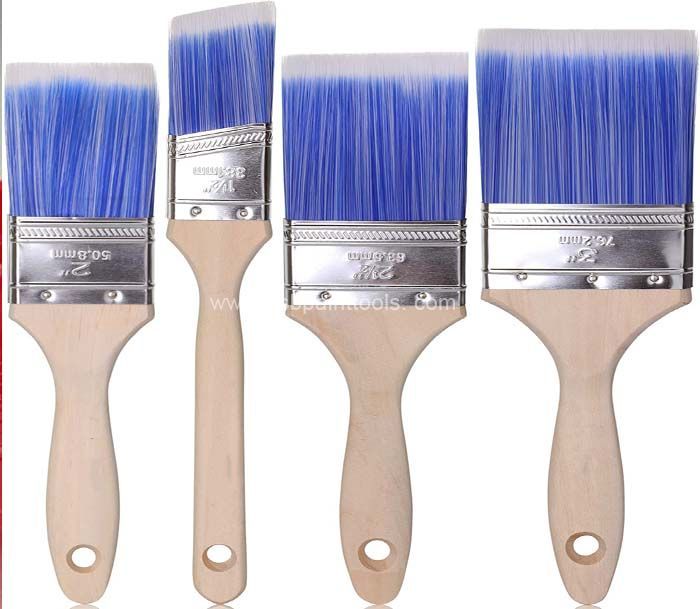
- Bristle profile: Check whether the tip is evenly shaped, whether the flags are excessively split, and whether the width matches the specification.
- Ferrule alignment: Look for gaps between the metal ferrule and handle. A tilted ferrule may produce an uneven edge and can indicate poor assembly.
- Handle finish: Check for sharp edges, peeling coating, excessive odor, and cracks around the hanging hole.
- Loose fibers: Tap each brush gently over a clean white sheet and count visible fibers. Keep the result as a baseline before wet testing.
A simple sampling record should include supplier, SKU, lot number, brush width, fiber type, handle material, inspection date, and defect count. Buyers can then distinguish a supplier problem from damage caused by transport or storage.
How to Test Paint Brush Durability in Bulk
There is no single universal durability number for every paint brush. A short natural-fiber brush, a synthetic trim brush, and an artist detail brush are designed for different loads. The fairest comparison uses the same paint, surface, cleaning method, operator instructions, and number of cycles for every brand.
1. Bristle Retention and Pull-Out Force
Bristle shedding is one of the most visible defects for both professional painters and retail customers. A buyer can perform a controlled pull test by gripping a small bundle of fibers with a spring scale or calibrated force gauge. The test should be repeated at several points around the brush, not only at the center.
Record:
- Peak force before fibers release, measured in newtons.
- Number of fibers released during a defined 10-second pull.
- Fiber loss after dry handling, wet application, and cleaning.
- Whether the released fibers come from the tip, side, or ferrule area.
This test is a screening method rather than a complete laboratory certification. Results can change with fiber diameter, crimping, adhesive type, and moisture content. A useful purchasing rule is to compare the average and the worst result from the same sample group. A supplier whose average is strong but whose worst sample is visibly defective still creates retail risk.
2. Abrasion Cycles on a Painted Surface
To simulate repeated brush use, apply the same water-based wall paint to a sealed test panel. Use a fixed stroke length, pressure, and paint load. For example, a buyer may define one cycle as 50 back-and-forth strokes over a 300 mm line, followed by a reload. The exact number is less important than using the same method for all samples.
After 100, 250, and 500 cycles, record:
- Change in brush width and edge sharpness.
- Visible fiber loss.
- Splitting, matting, or permanent bending of the tip.
- Paint pickup and release consistency.
- Operator comfort and handle slippage.
For trim brushes, edge retention is often more commercially relevant than the total number of strokes. A brush may still hold together after 500 cycles but no longer produce a clean line. Buyers should photograph the wet and dry profile at each checkpoint.
3. Water, Detergent, and Solvent Resistance
Cleaning conditions must match the product’s intended coating system. Water-based paint generally requires water and mild detergent, while oil-based coatings may require a compatible solvent. Never assume that a brush designed for acrylic paint will tolerate mineral spirits or other aggressive cleaners.
A controlled cleaning test can include 10 application-and-cleaning cycles. Weigh or visually inspect the brush before and after the test, then assess:
- Handle swelling or cracking.
- Ferrule discoloration or corrosion.
- Adhesive softening.
- Fiber stiffness and shape recovery.
- Residual odor after drying.
Solvent compatibility depends on the resin, adhesive, coating, and exposure time. Therefore, the test report should name the actual cleaning liquid, concentration, temperature, and immersion time. “Chemical resistant” without those details is not a useful wholesale specification.
4. Ferrule and Handle Durability
The ferrule transfers pressure from the handle to the fibers. A loose ferrule can cause bristle loss even when the fiber material itself is durable. Hold the handle and apply controlled rotational movement while checking for clicking, movement, or visible separation. A pull test can also be used to measure the force needed to separate the handle from the ferrule.
Inspect the following points:
- Crimp points or rivets securing the ferrule.
- Adhesive coverage inside the ferrule.
- Handle-to-ferrule alignment.
- Surface coating after wet handling.
- Ergonomic shape during a 30-minute painting session.
For wholesale orders, a buyer should define an acceptance limit before testing. For example, the purchase agreement may require zero sharp metal edges, no visible ferrule movement, and a documented maximum defect percentage in the inspected sample. The exact limit should reflect the product grade and local quality requirements.
Performance Analysis for G.SB Artist Paint Tools Painting Supplies
Durability is only valuable when the brush remains easy to use. A brush that lasts but holds too much paint, drags across the surface, or causes hand fatigue may receive poor reviews from professional users.
Paint Pickup and Release
Use a measured paint load rather than relying on visual impressions. Weigh a dry brush, load it for a fixed number of seconds, allow a defined drain time, and weigh it again. The difference provides an approximate paint pickup value. Repeat the measurement at least five times because loading behavior varies with pressure and fiber arrangement.
During application, note whether the brush releases paint evenly or produces heavy spots at the start of the stroke. A well-balanced synthetic filament blend should maintain a predictable edge while the paint viscosity remains within the manufacturer’s stated range. Paint temperature, room humidity, surface porosity, and coating formulation can all change the result.
Ease of Use and Operator Fatigue
Ask several painters to use the same brush for a fixed period, such as 30 minutes, and score handle comfort on a defined 1-to-5 scale. Record hand pressure, slipping, wrist position, and the number of pauses. This is not a medical assessment, but it gives a more useful result than a buyer handling the brush for 30 seconds.
For retailers, a comfortable handle can reduce complaints from customers who use the brush for home renovation. For contractors, the more important metric may be edge control after several hours. The correct choice depends on the end user, not only on the supplier’s catalog description.
Buyer-Reported Case: A Decorating Contractor’s Brush Replacement Test
One useful field report came from a small decorating contractor managing a 12-person team. The company was replacing brushes frequently because loose fibers appeared during water-based trim work and several handles became slippery after repeated washing. The purchasing manager divided samples into three groups: a low-cost bulk brush, a mid-range retail brush, and a G.SB sample set.
The team used the same satin water-based coating on primed wood, followed by cleaning with water and mild detergent. Each brush was used for repeated trim sections rather than tested by a single short demonstration. The team recorded edge quality, visible fiber loss, handle comfort, and cleaning time after each shift.
The manager reported that the G.SB group maintained a usable edge longer than the low-cost group, while the mid-range group produced similar line quality but at a higher quoted unit cost. However, this was a buyer-reported field comparison, not an independent laboratory study. It should be treated as practical evidence for further sampling, not as a universal claim about every G.SB SKU.
The most important lesson was procedural: the contractor changed suppliers only after comparing the total cost per completed trim section. Unit price alone did not explain the result. Labor interruptions, fiber removal, cleaning time, and replacement frequency affected the final purchasing decision.
Paint Brush Comparison: G.SB Versus Common Competitor Categories
Wholesale buyers often compare products by category rather than by brand name. The following framework avoids unsupported claims and helps buyers build a fair sample test.
| Product category | Typical advantage | Typical risk | Best comparison metric |
|---|---|---|---|
| Entry-level bulk brush | Low purchase price and broad availability | Higher variation between pieces and more frequent shedding | Defect rate per carton and cost per usable job |
| Retail mid-range brush | More consistent packaging and handle finish | Unit price may be high for large contractor orders | Edge retention, comfort, and replacement interval |
| Professional synthetic brush | Good shape recovery for many water-based coatings | Performance varies by filament blend and adhesive | Paint release, recovery after cleaning, and pull-out force |
| G.SB wholesale sample | Can be assessed through a defined specification and batch test | Results depend on the exact model, size, fiber, and coating system | Lot consistency, service life, and total cost per completed task |
G.SB should not be selected solely because of a brand name, just as another supplier should not be rejected solely because of a low listed price. Request samples from the exact production specification, then compare them under the coating and cleaning conditions your customers actually use.
Wholesale Paint Brush Supplier Evaluation and Order Planning
Questions to Ask Before a Purchase Order
- What fiber type, diameter, length, and blend ratio are used?
- What adhesive and ferrule attachment method are specified?
- What are the acceptable limits for loose fibers, crooked ferrules, damaged handles, and coating defects?
- Are samples taken from one production lot or multiple lots?
- How are products protected from humidity during storage and shipping?
- Can the supplier provide a packing list, lot identification, and inspection record?
- Which paint types and cleaning agents are approved for the brush?
Calculate Total Cost Instead of Unit Price
A simple purchasing model is:
Total cost per usable job = purchase price + labor interruption cost + cleaning or replacement cost + return cost.
For example, if a brush costs $1.20 but requires replacement after four jobs, its brush cost is $0.30 per job. A $2.00 brush lasting ten comparable jobs costs $0.20 per job before labor and return expenses. These figures are examples for calculation, not performance claims about a specific product. Each buyer should replace them with measured results from their own trial.
Ratings and Recommendations for Artist Paint Tools Painting Supplies
The following rating system is suitable for a wholesale pilot order. It rewards measurable performance rather than attractive packaging.
| Evaluation area | Weight | What to measure |
|---|---|---|
| Bristle retention | 25% | Fiber count after dry, wet, and cleaning tests |
| Edge and shape retention | 20% | Brush width, line quality, and recovery after 100–500 cycles |
| Ferrule and handle security | 20% | Movement, cracks, pull-out force, and coating condition |
| Paint application | 15% | Pickup, release, drag, and coverage consistency |
| Cleaning resistance | 10% | Performance after repeated approved cleaning cycles |
| Packaging and batch consistency | 10% | Transport protection and defect rate across sampled cartons |
A practical ranking should be created only after the same test is completed by every sampled supplier:
- Best for professional contractor supply: the brush with the lowest cost per usable job and stable edge performance after repeated cleaning.
- Best for hardware-store retail: the brush with low visible defects, clear usage instructions, comfortable handling, and reliable packaging.
- Best for art classrooms and general painting: the brush that balances shape retention, easy cleaning, and a price suitable for frequent replacement.
G.SB is a reasonable candidate for a controlled wholesale pilot when its exact model meets the buyer’s required bristle retention, ferrule security, application, and packaging targets. The final decision should be based on recorded sample results and an approved production specification, not on a generic catalog statement.
Final Recommendation: A Data-Based Durability Decision
Before placing a large order, purchase a representative sample, test pieces from multiple cartons, and compare results against the intended paint system. Keep pictures, lot numbers, test dates, stroke counts, cleaning cycles, and defect totals in one report. This process gives purchasing teams evidence they can use when negotiating quality requirements or reviewing a future shipment.
For buyers comparing wholesale paint brushes for professional painters, the strongest decision combines bristle retention, ferrule construction, and solvent resistance with measured pull-out force, abrasion cycles, and coating adhesion. Evaluate G.SB and competing Artist Paint Tools Painting Supplies under identical conditions, calculate cost per usable job, and approve the supplier whose batch performance remains consistent—not simply the brush with the lowest invoice price.