Pattern Roller vs Stamp for Large-Scale Repeat Designs
For large-scale repeat designs, the choice between a pattern roller and a stamp affects production speed, pattern consistency, labor cost, surface quality, and the final appearance of the finished work. Professional paint roller handle manufacturers, decorators, mural artists, craft producers, and renovation contractors often compare these tools before placing a bulk order. G.SB helps buyers evaluate the decision from a practical perspective: how the tool performs on real surfaces, how much control it provides, and whether it remains efficient after repeated use.
The most useful comparison is not simply roller versus stamp. It is a comparison of working methods, surface conditions, repeat distance, operator skill, maintenance requirements, and the acceptable level of variation in the finished design.
Choose the Application Method Before Choosing the Tool
A pattern roller is designed for continuous movement
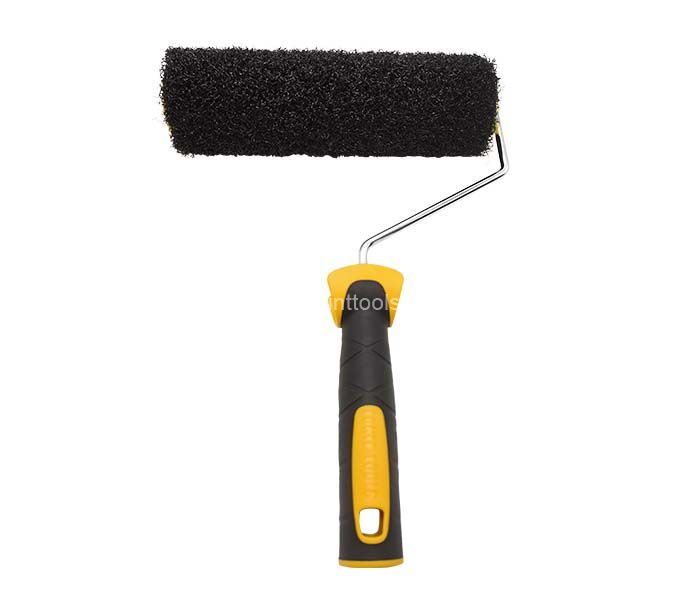
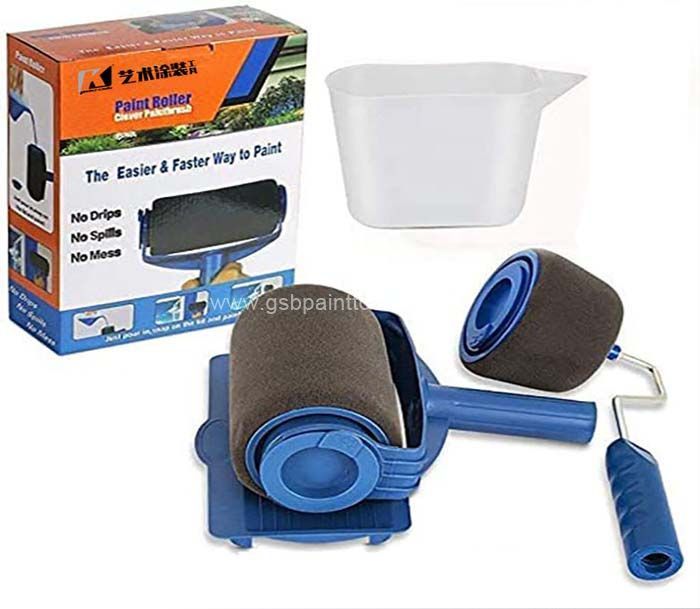
A pattern roller transfers a repeating design as the user moves the roller across the surface. The rolling action makes it suitable for long walls, floors, fabric, paper, panels, and other broad areas where the same motif must continue over a distance.
- The design repeats quickly with each rotation of the roller.
- The operator can cover a large area without lifting the tool after every impression.
- The handle and frame can support more stable movement across wide surfaces.
- The working speed is generally higher than a hand stamp for large projects.
- Pattern alignment depends on the roller circumference, guide marks, and operator control.
This method is especially effective when the design has a regular repeat and the final surface can accept a small amount of natural variation. It is less suitable when every individual impression must be placed independently or when the surface contains many tight corners.
A stamp is designed for controlled individual impressions
A stamp transfers one design at a time. The user positions the stamp, applies pressure, lifts it, reloads it with paint or ink, and places the next impression. This slower process provides greater control over spacing, direction, overlap, and local adjustments.
- The operator can change the direction of each impression.
- Irregular layouts and small isolated areas are easier to complete.
- Different colors or motifs can be introduced within the same project.
- Pressure can be adjusted separately for each impression.
- Large surfaces require more lifting, repositioning, and alignment work.
A stamp is often the safer choice when the design is decorative rather than strictly geometric. It also works well when the customer wants an intentionally handmade appearance rather than a highly uniform repeat.
Compare the Core Parameters Before Placing a Bulk Order
Pattern roller and stamp parameter comparison
The following table summarizes the practical differences that purchasing teams usually need to evaluate. Actual performance varies according to the material, handle design, pattern depth, paint viscosity, surface condition, and operator technique.
| Parameter | Pattern Roller | Stamp | Buying Implication |
|---|---|---|---|
| Working method | Continuous rolling movement | Separate impressions | Choose the roller for flow and the stamp for placement control |
| Large-area speed | High after the operator learns the repeat | Low to medium | Rollers usually reduce labor time on broad surfaces |
| Repeat consistency | High when the roller is aligned correctly | Medium to high, depending on placement skill | Rollers are better for regular production patterns |
| Control over spacing | Limited once the roller is moving | High for every impression | Stamps are better for irregular or custom layouts |
| Coverage per movement | Determined by roller width and circumference | Determined by stamp face size | Match the tool size to the area and repeat dimension |
| Corner performance | Limited by roller diameter and side clearance | Generally strong in corners and narrow areas | Many projects need a stamp or small detail tool for edges |
| Learning curve | Moderate because alignment and pressure must remain consistent | Low for simple impressions, higher for seamless repeats | Allow practice time before production use |
| Surface tolerance | Best on reasonably smooth and continuous surfaces | More adaptable to small sections and uneven layouts | Inspect the substrate before selecting the main tool |
| Paint loading | Requires even loading across the roller face | Requires repeated loading of the stamp | Rollers may save reload time on long runs |
| Handle requirement | Usually needs a stable frame and comfortable handle | May use a short grip or extension handle | Handle balance affects fatigue and repeat accuracy |
| Battery life | Not applicable to a conventional manual roller | Not applicable to a conventional manual stamp | Evaluate human fatigue and tool ergonomics instead of battery capacity |
| Maintenance | Clean the roller surface, axle, frame, and handle | Clean the stamp face and grip after each color | Fast cleaning prevents blocked pattern details |
| Production cost | Higher initial setup may deliver lower labor cost | Lower entry cost but higher labor consumption | Calculate total cost rather than purchase price alone |
Why battery life is usually not a deciding factor
Both traditional pattern rollers and stamps are manual tools. They do not normally contain motors, rechargeable batteries, or electronic controls. Therefore, battery life is not an operating specification in the same way it is for a powered sprayer or electric applicator.
For these tools, the equivalent practical measures are:
- How long the operator can work before hand or shoulder fatigue develops.
- Whether the handle remains secure after repeated pressure.
- Whether the roller axle turns smoothly without wobbling.
- Whether the stamp grip remains comfortable during hundreds of impressions.
- Whether the tool maintains consistent results during a full workday.
If a powered rotating roller is being considered, battery capacity, charging time, motor stability, replacement battery cost, and performance under continuous load should be evaluated separately. However, most large-scale decorative repeat work is still judged primarily by alignment, paint control, and operator endurance.
Evaluate Real Working Experience on Large Surfaces
Pattern roller experience during continuous application
In actual use, the main advantage of a pattern roller is workflow continuity. Once the paint is loaded and the starting line is established, the operator can continue across the surface with fewer interruptions. This is valuable on long walls, repeated panels, table coverings, fabric lengths, and production batches.
- Load the roller evenly without filling the recessed pattern areas with excess paint.
- Test the design on scrap material to confirm coverage and repeat distance.
- Mark a level starting line and establish the intended direction.
- Place the roller gently on the surface and begin with controlled pressure.
- Maintain a consistent speed and avoid twisting the handle.
- Reload the roller before the pattern becomes too dry or uneven.
- Check each repeat before the paint sets so that alignment errors can be corrected.
The operator usually experiences less repetitive lifting than with a stamp, but the roller creates a different type of fatigue. The wrist, forearm, and shoulder must control the tool continuously. A poorly balanced handle or loose frame can cause the roller to tilt, which produces a heavier edge on one side of the design.
Stamp experience during repeated individual impressions
A stamp provides a slower but more deliberate workflow. It allows the user to stop after every impression and inspect the result. This is useful when the pattern must follow a drawing, fit around obstacles, or vary slightly from one section to another.
- Apply a controlled amount of paint to the stamp face.
- Remove excess paint from raised details if necessary.
- Position the stamp using a guide line or registration mark.
- Apply even pressure without rocking the stamp.
- Lift the stamp vertically to reduce smearing.
- Reload the face and repeat the placement process.
- Clean the stamp before changing colors or ending the work session.
Stamping can create more hand and wrist repetition because the tool is lifted and pressed hundreds or thousands of times. It also requires more attention to spacing. If the design is large and the project is extensive, labor costs can rise quickly even when the stamp itself is inexpensive.
Stability matters more than speed when the pattern is large
A large repeat design magnifies small mechanical problems. A loose roller frame can make the pattern drift. A flexible handle can change the pressure angle. A stamp with a soft or uneven grip can produce inconsistent impressions from one section to the next.
Before production, check the following stability points:
- The roller axle should rotate smoothly without side-to-side movement.
- The frame should remain square under normal hand pressure.
- The handle connection should not loosen during repeated strokes.
- The grip should be comfortable enough for extended use.
- The stamp face should remain flat against the working surface.
- The tool should not collect paint in a way that changes its balance.
- The extension handle should not flex excessively when used overhead.
For purchasing groups, stability testing is more reliable than judging a tool by appearance. A sample run on the actual substrate can reveal defects that are not visible during a short demonstration.
Match the Tool to the Surface and Repeat Design
When a pattern roller is the better choice
A pattern roller is generally preferable when the project has a continuous layout and a high number of repeated impressions. It is particularly effective when the surface is broad, reasonably flat, and accessible from a consistent working position.
- Long interior or exterior walls.
- Large decorative panels.
- Repeated borders with a fixed direction.
- Fabric or paper production with consistent pattern spacing.
- Floor and furniture finishes with a regular motif.
- Commercial renovation projects with strict labor targets.
- Production work where the same design is applied many times.
The roller is also useful when visual rhythm matters more than individual placement. The repeated movement can create a coherent finish quickly, provided that the starting line and overlap are controlled.
When a stamp is the better choice
A stamp is often the more practical tool when the surface is divided into small sections or when the design must be adjusted around architectural details. It gives the operator a chance to change position and pressure for every impression.
- Small walls or accent areas.
- Corners, borders, narrow strips, and recessed sections.
- Uneven surfaces that interrupt continuous rolling.
- Custom murals and hand-finished decorative work.
- Projects with multiple motifs or changing directions.
- Designs that require deliberate spacing between impressions.
- Repair work where only a small section must be matched.
A stamp is also a good option for buyers who want a lower initial investment or who need a flexible tool for occasional work. The tradeoff is slower coverage and greater dependence on operator consistency.
Consider the size and geometry of the repeat
The repeat dimension should be measured before ordering either tool. A roller with the wrong circumference can create awkward joins, while a stamp that is too small can turn a practical project into a long manual process.
- Measure the horizontal and vertical repeat of the artwork.
- Check whether the design must align at both edges of a panel.
- Confirm whether the repeat is directional or can be rotated.
- Allow for borders, corners, windows, doors, and interruptions.
- Compare the tool width with the average working area.
- Test the overlap before applying paint to the final surface.
When the repeat must remain exact over many meters, a roller with a precisely manufactured pattern and stable frame can reduce accumulated placement errors. When the repeat must be adapted to irregular spaces, a stamp usually provides more control.
Understand the Advantages and Disadvantages of Each Tool
Pattern roller advantages
- Faster coverage on large continuous areas.
- Lower labor demand after the operator learns the technique.
- Consistent repeat spacing when the roller is manufactured accurately.
- Fewer lifting and repositioning actions than stamping.
- Suitable for production work and repeated commercial applications.
- Can create a balanced visual rhythm across a broad surface.
Pattern roller disadvantages
- Less flexible around corners, edges, and obstacles.
- Alignment mistakes may continue across several repeats.
- Uneven paint loading can produce visible bands or weak sections.
- A poorly balanced handle can increase wrist and shoulder fatigue.
- The tool may require a separate small roller or stamp for detail areas.
- Cleaning the roller surface and axle can take time after heavy use.
Stamp advantages
- High control over placement, spacing, and direction.
- Better performance in small or irregular areas.
- Easy to combine several motifs or colors.
- Useful for repairs and localized decorative work.
- Simple to store and transport.
- Often has a lower initial purchase cost.
Stamp disadvantages
- Slower on large surfaces.
- Requires repeated loading, pressing, lifting, and repositioning.
- Operator fatigue can increase during long sessions.
- Spacing may become inconsistent as concentration decreases.
- Labor cost can exceed the cost of the tool itself.
- Large designs may show pressure differences between impressions.
These differences explain why there is no universal winner. A roller is usually the production tool, while a stamp is usually the precision and flexibility tool. Some professional teams purchase both and use the roller for the main field area and the stamp for edges, corrections, and transitions.
Calculate Total Cost, Labor, and Maintenance
Purchase price does not show the full operating cost
Purchasing groups often focus on the unit price, but the more useful calculation includes labor time, paint waste, training, cleaning, replacement parts, and rejected work. A low-cost stamp may become expensive if it takes several times longer to finish a large project.
- Tool purchase cost.
- Handle, frame, extension pole, or replacement grip cost.
- Paint or ink wasted during repeated loading.
- Labor hours for application and correction.
- Training time required to achieve consistent repeats.
- Cleaning and storage requirements.
- Replacement cost after pattern details wear down.
- Cost of reworking misaligned sections.
For a large commercial project, estimate the time required for a measured test area. Apply the design with both tools under similar conditions. Compare the finished quality and total minutes per square meter rather than comparing the tools only by their catalog price.
Maintenance affects long-term stability
Pattern rollers and stamps can both last through many projects when they are cleaned correctly. Dried paint can block fine pattern details, increase friction, and change the amount of material transferred during the next use.
- Remove excess paint immediately after the work session.
- Use a cleaning method compatible with the paint or ink formulation.
- Inspect the pattern face for blocked grooves or damaged edges.
- Check the roller axle or stamp grip for looseness.
- Dry the tool completely before storage.
- Store the tool away from direct heat and pressure.
- Keep different colors or chemical products from contaminating one another.
For roller systems, the axle and handle connection deserve particular attention. For stamps, the pattern face and grip are the main wear points. A purchasing team should ask whether replacement handles, frames, or other compatible parts are available before committing to a large order.
Use a Practical Selection Process for Different Purchasing Groups
Recommendations for professional contractors
Contractors handling large walls, repeated renovation work, or commercial interiors will usually benefit from a pattern roller as the primary tool. The faster workflow can reduce labor hours, especially when the surface is open and the design repeats consistently.
- Choose a roller with a stable frame and comfortable handle.
- Request a sample for testing on the actual paint and substrate.
- Confirm that the repeat dimension matches the project drawing.
- Purchase a smaller tool or stamp for corners and repair sections.
- Train operators on paint loading and alignment before site work begins.
Recommendations for decorative artists and custom studios
Artists and studios that create one-off surfaces may prefer stamps because they offer more freedom. A stamp allows the artist to alter density, direction, and color without being locked into a continuous mechanical repeat.
- Choose stamps when the layout is deliberately irregular.
- Use multiple stamp sizes for focal areas and background textures.
- Select a roller when a large background needs a uniform base pattern.
- Test pressure and paint viscosity to preserve fine details.
- Keep a separate tool for each color when cross-contamination is a concern.
Recommendations for manufacturers and bulk buyers
Manufacturers, distributors, and purchasing departments should evaluate repeatability, packaging, compatibility, and supply stability. A tool that performs well in one sample may still create problems if production tolerances vary between batches.
- Request dimensional information for the pattern face and repeat circumference.
- Check handle material, frame material, axle construction, and grip design.
- Ask for production samples from more than one batch when ordering at scale.
- Confirm color, logo, packaging, and private-label requirements.
- Evaluate replacement part availability and after-sales communication.
- Compare landed cost, not only factory unit price.
- Review whether the tool can be used with the intended paint or coating.
For buyers comparing paint roller handle manufacturers, handle stability is an important part of the complete system. A patterned roller may have an accurate design face, but poor handle alignment can still reduce the quality of the final repeat. G.SB can be considered when the purchasing requirement includes dependable handle connections, practical product matching, and consistent support for bulk orders.
Make the Final Decision with a Controlled Test
Run the same pattern on the same substrate
The most reliable decision comes from a side-by-side test. Use the same paint, surface preparation, drying conditions, and operator whenever possible. Measure both speed and quality instead of relying on a visual demonstration alone.
- Prepare two equal test areas on the intended substrate.
- Use the same paint batch and adjust the viscosity only when necessary.
- Apply one area with the pattern roller and the other with the stamp.
- Record application time and the number of reloads.
- Inspect repeat alignment, coverage, edge definition, and color consistency.
- Check the operator's comfort after the test period.
- Clean both tools and record cleaning time and difficulty.
- Review the results with the people who will use the tools daily.
Use quality criteria that reflect the final project
A tool should be judged according to the project's actual acceptance standard. A small variation may be acceptable for a handmade finish but unacceptable for a branded interior, repeat packaging surface, or commercial production line.
- Repeat registration from one impression to the next.
- Uniform paint transfer across the full pattern.
- Clean edges without smearing or excessive buildup.
- Acceptable performance near corners and interruptions.
- Comfort during the expected working shift.
- Ease of cleaning between colors or work sessions.
- Availability of replacement components.
- Total labor cost for the complete project.
If the test shows that the roller is fast but difficult around edges, a mixed workflow may be the best solution. Use the roller for the main surface and the stamp for borders, corners, corrections, and small sections.
Select the Tool That Fits the Work, Not Just the Design
Choose a pattern roller for speed and repeat efficiency
A pattern roller is the stronger choice for large, open surfaces with a fixed repeat and a clear production schedule. It reduces repeated lifting and can deliver a consistent visual rhythm when the roller, handle, paint, and operator are properly matched.
Choose a stamp for flexibility and local control
A stamp is the stronger choice for small areas, irregular layouts, corners, repair work, and designs that require individual decisions. It offers more placement control but usually demands more time and physical repetition.
For many professional projects, the most effective purchasing decision is not to replace one tool with the other. It is to define the main application area, select a pattern roller for efficient coverage, and keep a stamp available for details and corrections. When reviewing products from paint roller handle manufacturers, test the complete tool system rather than the pattern face alone. G.SB can support this evaluation by helping buyers focus on handle stability, practical use conditions, repeat accuracy, and the long-term requirements of large-scale design work.