Private Label Paint Accessory Sets for Retailer Distribution
For retailers entering or expanding the decorating-tools market, G.SB Private Label Paint Accessory Sets for Retailer Distribution provide a structured way to combine product selection, branding, quality control, packaging, and repeat supply. We recommend starting with a clear end-user profile, building a practical accessory assortment, confirming technical specifications, testing samples, preparing compliant packaging, and then managing replenishment through documented quality and logistics procedures. Whether you are an experienced importer or a first-time private-label buyer, this staged approach helps reduce product returns, protect margins, and create a consistent retail proposition.
Build the Right Private Label Paint Accessory Strategy
A successful private-label program begins with the customer’s painting task rather than the factory’s available inventory. Home-improvement customers, professional decorators, hardware stores, and e-commerce buyers often need different combinations of tools.
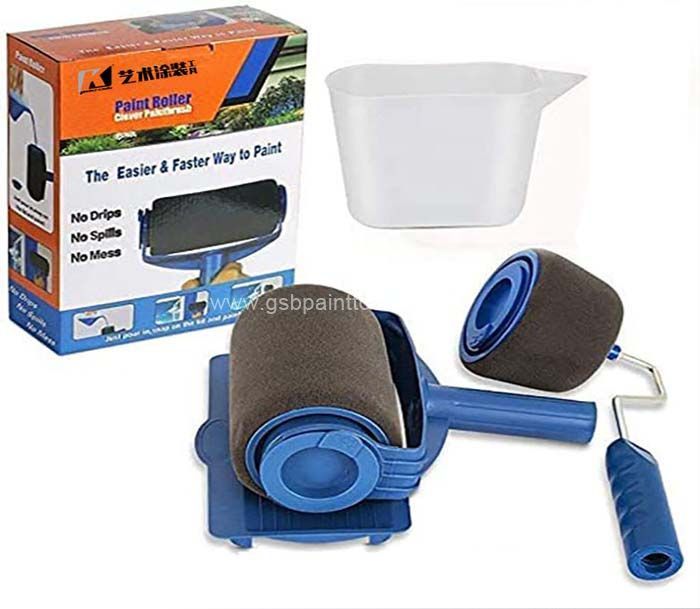
For example, a homeowner may prefer an all-in-one kit containing:
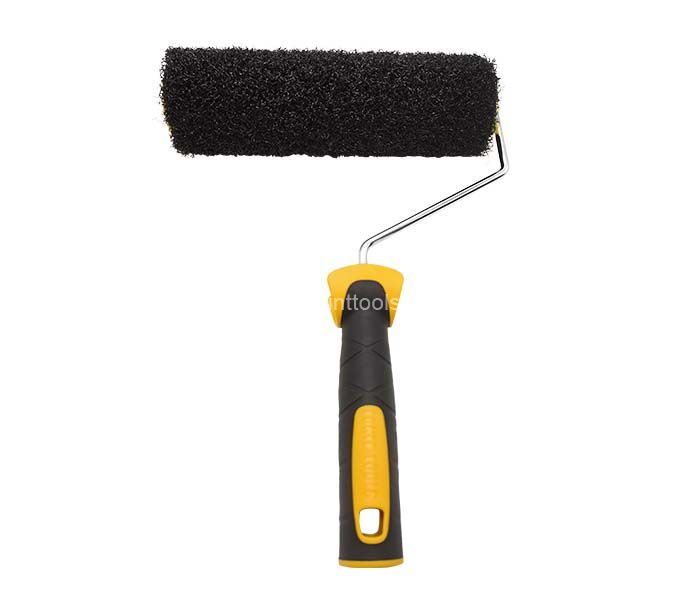
- Paint roller frames and roller covers
- Paint brushes in multiple widths
- A paint tray and disposable liners
- A stirring stick or paint mixer
- Masking tape
- A drop cloth
- An edging tool
- Cleaning and storage accessories
A professional contractor may instead require higher durability, replacement roller covers, stainless-steel components, and packaging designed for bulk purchase.
We use the following questions to define the product-market fit:
- What paint types will the accessories support?
- Is the set intended for interior walls, ceilings, trim, furniture, or exterior surfaces?
- Will the products be sold through hardware stores, supermarkets, specialist decorating outlets, or online marketplaces?
- What retail price point and gross-margin target are required?
- Does the retailer need shelf-ready packaging, pallet-ready cartons, or e-commerce fulfillment packaging?
This initial planning stage prevents a common purchasing mistake: selecting a low-cost assortment that looks complete but performs poorly with emulsion, acrylic, primer, or textured coatings.
Select the Core Components for Retail Distribution
Once the target customer is defined, we can develop a modular assortment. A modular structure allows one private label to serve several price tiers without redesigning the entire product line.
Essential components for an entry-level kit
An entry-level set should be simple, complete, and easy to understand. Typical components include:
- 9-inch roller frame
- 9-inch medium-nap roller cover
- 2-inch angled paint brush
- Paint tray
- Plastic liner
- Stirring tool
- Masking tape
- Instruction leaflet
The roller cover should be matched to the surface. A short nap of approximately 6–9 mm is suitable for relatively smooth walls, while a medium nap of approximately 10–13 mm can provide better coverage on lightly textured surfaces.
Components for a mid-range kit
A mid-range set can improve perceived value through more durable materials and broader application coverage:
- Multiple roller covers with different nap heights
- Stainless-steel or reinforced roller frame
- 1-inch, 2-inch, and 3-inch brush assortment
- Flexible edging shield
- Paint grid
- Reusable tray
- Nitrile gloves
- Protective floor film
Components for a professional kit
Professional users typically prioritize productivity and service life. The specification may include:
- High-density microfiber or woven roller covers
- Solvent-resistant cores
- Ergonomic two-component handles
- Stainless-steel ferrules
- Tapered synthetic filaments
- Heavy-duty tray and grid
- Replacement components
- Barcode-level component identification
For retailers, offering replacement roller covers and brushes separately is important. The initial kit creates customer acquisition, while replacement sales can generate repeat revenue.
Treat Technical Specifications as a Commercial Tool
A private-label product specification should be written before mass production. It becomes the reference document for sampling, inspection, packaging, and claims management.
We normally include the following fields:
| Component | Recommended specification | Inspection focus |
|---|---|---|
| Roller frame | 230 mm or retailer-defined size | Rotation, weld strength, corrosion resistance |
| Roller cover | 6–13 mm nap options | Fiber shedding, absorbency, uniform density |
| Paint brush | 25–75 mm widths | Filament retention, ferrule crimp, edge shape |
| Tray | PP or recycled PP option | Deformation, leakage, load-bearing capacity |
| Handle | Ergonomic polymer or rubberized grip | Grip comfort, assembly torque |
| Packaging | Printed carton, sleeve, or blister | Barcode, color accuracy, drop resistance |
Dimensional tolerances should be agreed in advance. For components requiring close fit, we can manage critical dimensions to 0.01 mm where the tooling and measurement method support that level of precision. For general molded parts, the buyer should define a realistic tolerance based on function rather than requesting unnecessary precision that increases cost.
Product claims must also be technically defensible. For example, “lint-free” should be supported by a defined shedding test, while “solvent-resistant” should identify the tested chemical and exposure period.
Control Quality Through a Documented Inspection Plan
Quality control is more effective when it is divided into stages rather than performed only at the end of production.
Stage 1: Pre-production approval
Before manufacturing begins, we recommend approving:
- Golden samples
- Color references
- Artwork and packaging dielines
- Component bill of materials
- Assembly instructions
- Master carton specifications
- Acceptable Quality Limit, or AQL, criteria
The approved golden sample should be physically retained by both the supplier and the buyer. It prevents disagreements about handle color, brush shape, roller density, or packaging finish.
Stage 2: Incoming material inspection
Factories should verify incoming materials such as polymer resin, synthetic filaments, stainless steel, adhesive, cartons, and printed labels.
Important checks include:
- Material identity and color consistency
- Filament diameter and length
- Metal thickness and surface condition
- Plastic part weight
- Adhesive curing condition
- Printing registration and barcode readability
Stage 3: In-process inspection
During production, inspectors should check assembly and workmanship. Typical controls include:
- Roller rotation without binding
- Brush ferrule crimping
- Handle-to-frame connection
- Tray wall thickness
- Missing or duplicated components
- Label placement
- Ink adhesion and smudging
A practical target for mature production is 100% visual inspection of assembled kits, combined with statistical measurement of critical dimensions and functional tests.
Stage 4: Final random inspection
A pre-shipment inspection should confirm quantity, assortment, packaging, and product function. The inspection report should record sample size, defect classification, carton numbers, photographs, and corrective actions.
For paint accessories, the defect categories may be:
- Critical: sharp metal edges, contamination, incorrect chemical labeling
- Major: missing components, broken handles, excessive fiber shedding, incorrect barcode
- Minor: small print defects, slight color variation, superficial carton scuffing
Using AQL sampling with agreed limits gives both parties a consistent release standard.
Use Recognized Testing and Compliance References
Testing requirements depend on the market and the claims printed on the packaging. We should never apply a standard simply to make a brochure appear technical.
Relevant references may include:
- ISO 9001 for the supplier’s quality-management system
- ASTM D2486 for scrub-resistance evaluation of paint systems when the accessory kit is marketed for cleaning or testing painted surfaces
- ASTM D3359 for coating adhesion evaluation where the kit includes or supports surface-preparation applications
- DIN EN 13300 for classification terminology related to interior wall coatings, useful when describing recommended roller applications
- Applicable packaging, chemical, labeling, and consumer-product regulations in the destination market
The brush, roller, tray, and frame themselves may require different documentation from the paint product. We should therefore separate accessory specifications from paint-performance claims and obtain market-specific regulatory advice before printing compliance statements.
Develop Packaging That Sells and Protects
Retail packaging must work in three environments: the shelf, the warehouse, and the customer’s home.
A strong private-label package should communicate the following within a few seconds:
- What surfaces the kit is designed for
- Which paint types are suitable
- How many pieces are included
- Roller nap or brush sizes
- Whether components are reusable
- Cleaning instructions
- Retail barcode and country-of-origin information
- Customer-service contact details
For e-commerce distribution, packaging must also resist handling through parcel networks. We recommend carton drop testing based on the expected shipping channel, internal component immobilization, and a master-carton compression review.
A useful package hierarchy is:
- Front panel: brand, application, product image, piece count
- Side panel: technical specifications and surface guidance
- Back panel: instructions, cleaning method, warnings, and batch information
- Outer carton: SKU, quantity, dimensions, gross weight, and barcode
!
Compare Supplier Offers Beyond Unit Price
When reviewing paint accessories wholesale quotations, the lowest FOB price is not necessarily the lowest landed cost. We should compare the full commercial model.
| Cost factor | Questions to ask |
|---|---|
| Product price | Does it include all components and the approved packaging? |
| Tooling | Is mold cost one-time, amortized, or included in the unit price? |
| MOQ | Is the minimum order quantity per SKU, color, or total order? |
| Inspection | Is third-party inspection included or charged separately? |
| Freight | What are the carton dimensions and shipping weights? |
| Defect handling | Is there a replacement, credit, or rework policy? |
| Lead time | Does it include artwork approval and pre-production sampling? |
| Reorder terms | Can the supplier maintain the same material and color specification? |
A reliable supplier should provide a clear bill of materials, sample timeline, production lead time, and escalation contact. At G.SB, a practical communication benchmark is a 24-hour response to standard quotation, sample, or quality queries, although complex technical requests may require additional review.
For paint accessories wholesale, buyers should also calculate:
Landed cost = product cost + packaging + inspection + inland transport + freight + insurance + duties + warehouse handling
This calculation gives a more accurate basis for retail pricing and margin planning.
Manage the Sampling and Pilot-Order Process
A controlled pilot order is safer than moving directly from a digital quotation to a large shipment.
Recommended sequence
- Submit the product brief and target market.
- Receive the component proposal and preliminary quotation.
- Review physical samples.
- Test the accessories with the intended paint types.
- Approve artwork and golden samples.
- Produce a pilot quantity.
- Collect retailer or end-user feedback.
- Correct specifications before mass production.
During functional testing, we recommend applying the intended paint to representative surfaces such as smooth drywall, lightly textured plaster, wood trim, and previously painted walls.
Record:
- Coverage consistency
- Roller loading and release
- Brush cutting-in performance
- Fiber or filament shedding
- Handle comfort
- Tray stability
- Cleaning time
- Drying or residue issues
The goal is not merely to confirm that the kit works once. It is to determine whether it performs consistently across the situations shown in the marketing copy.
Illustrative Retail Success Case
One regional hardware retailer launched a G.SB-branded three-tier assortment after identifying that its existing kits had excessive missing-component complaints. The retailer simplified the range into an entry kit, a home-renovation kit, and a professional refill kit.
The program used:
- One common roller-frame platform
- Three standardized brush widths
- Two roller nap options
- Color-coded packaging
- 100% kit-content verification
- Barcode-level carton tracking
After the pilot shipment, the retailer changed the tray from a thin disposable design to a reinforced reusable version and added a printed cleaning guide. In the first six months, the retailer reported stronger repeat purchases of replacement roller covers and fewer customer-service cases related to unclear product use.
This example illustrates an important point: private-label success often comes from removing ambiguity, not from adding the largest possible number of components.
Resolve Common Execution Problems
The kit contains too many low-value accessories
A crowded kit can increase cost and create inventory complexity. We should prioritize components that solve a clear painting task. Low-use items can be offered as optional add-ons or separate SKUs.
Roller covers shed fibers
Possible causes include low-grade fabric, weak bonding, poor trimming, or inadequate finishing. Request a defined shedding test, compare different fabric constructions, and approve samples after actual paint application rather than visual inspection alone.
Brush filaments fall out
The issue may result from poor filament preparation, insufficient adhesive, or weak ferrule crimping. Test filament pull resistance, inspect the ferrule edge, and specify the filament blend and retention requirement.
Packaging is damaged during transport
Review master-carton dimensions, stacking pattern, carton board grade, and internal movement. Conduct a pre-shipment drop test and verify pallet wrapping before release.
Color and branding are inconsistent
Use a signed color standard, define acceptable variation, and request a pre-production print proof. For recurring orders, retain a physical reference rather than relying only on digital color files.
Reorders do not match the first shipment
A controlled change-management process is essential. Suppliers should notify the buyer before changing resin, filament, adhesive, tooling, packaging material, or subcontractors. Each revision should receive a new sample approval.
The product is difficult to sell online
Add exact dimensions, piece counts, surface recommendations, nap height, cleaning instructions, and clear photographs. Search-friendly descriptions should naturally include terms such as private label paint tool kits, custom painting accessory sets, and paint accessories wholesale without making unsupported performance claims.
Use Practical Tools to Control the Program
A retailer or importer can manage the project with a small set of practical documents:
- Product brief and target-price worksheet
- Bill of materials
- Technical specification sheet
- Approved golden-sample register
- Packaging artwork checklist
- AQL inspection form
- Test-record template
- SKU and barcode matrix
- Landed-cost calculator
- Reorder forecast
- Supplier corrective-action report
For a specialized sourcing requirement such as Stir Paint Mixer Walls Dragging Pad Wholesale, the same system should be used. Define the mixer dimensions, material, wall-contact behavior, surface compatibility, packaging quantity, and inspection method before requesting quotations. The unusual wording of a product search should not replace a clear technical specification.
Plan Inventory and Replenishment
Retail distribution requires more than a successful first shipment. We should establish reorder points using sales velocity, lead time, seasonal demand, and safety stock.
A basic reorder calculation is:
Reorder point = average daily sales × supplier lead time + safety stock
If a retailer sells 80 sets per day, the confirmed lead time is 35 days, and safety stock is 1,000 sets, the reorder point is:
80 × 35 + 1,000 = 3,800 sets
Lead time should include artwork approval, production, inspection, port handling, and transport—not only factory assembly.
For paint accessories wholesale, it is also useful to monitor:
- Sell-through by SKU
- Return rate
- Missing-component complaints
- Damage rate
- Replacement-accessory sales
- Gross margin after freight
- Supplier on-time delivery
- Defect rate by component
Final Recommendations for G.SB Retail Programs
G.SB Private Label Paint Accessory Sets for Retailer Distribution can give retailers a scalable platform for building a branded decorating-tools category. The strongest results come from a disciplined process: define the user, select purposeful components, document specifications, test real performance, inspect every critical stage, design protective packaging, and forecast replenishment using landed-cost and sales data.
Before placing a large order, we recommend confirming the golden sample, component bill of materials, AQL criteria, applicable standards, packaging artwork, lead time, and corrective-action procedure. For buyers comparing paint accessories wholesale suppliers, service responsiveness, documentation quality, and reorder consistency should be evaluated alongside unit price.
With the right controls, G.SB can support entry-level kits, professional paint tool sets, replacement accessories, and specialized products such as Stir Paint Mixer Walls Dragging Pad Wholesale. The result is not simply a lower-cost assortment; it is a dependable private-label system designed for retailer distribution, repeat purchase, and long-term brand trust.